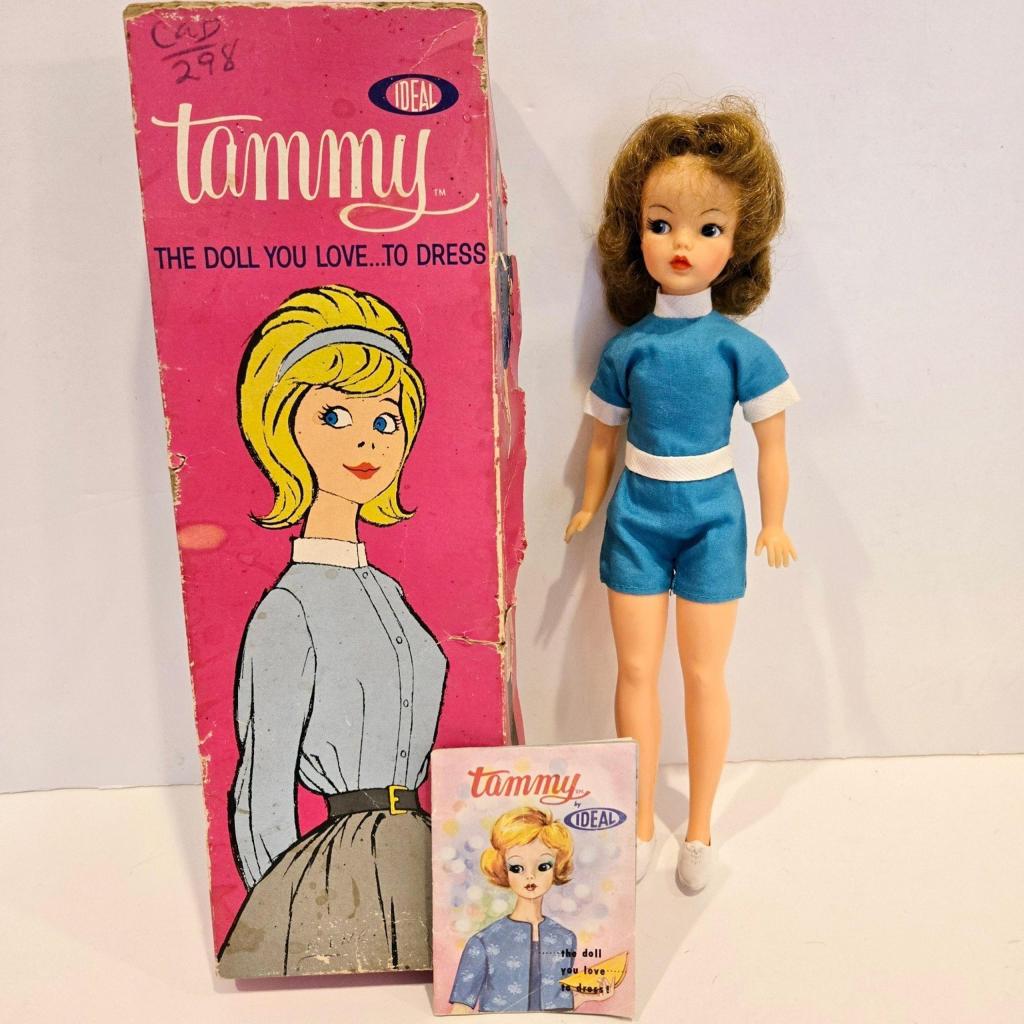
Sometimes the best miniature discoveries don’t happen at an antique mall, estate sale or online auction.
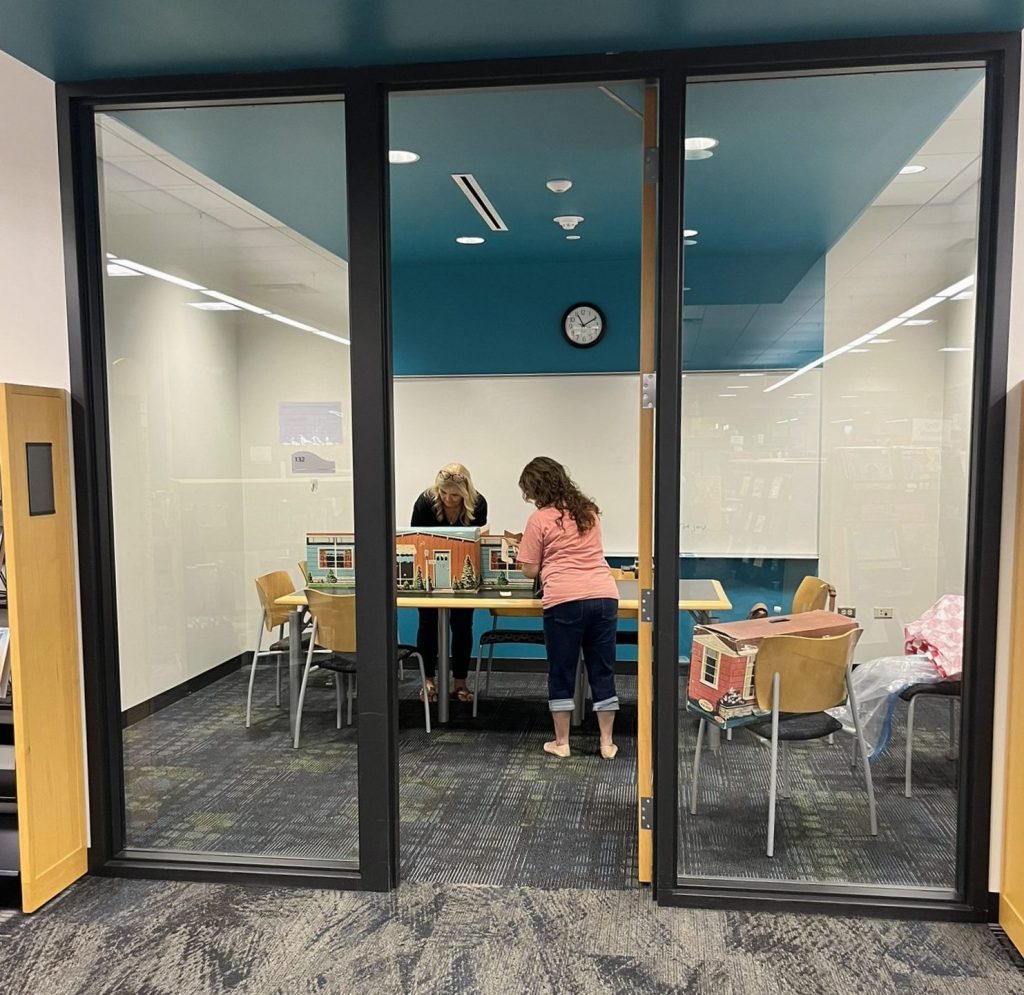
Sometimes they happen at the library.
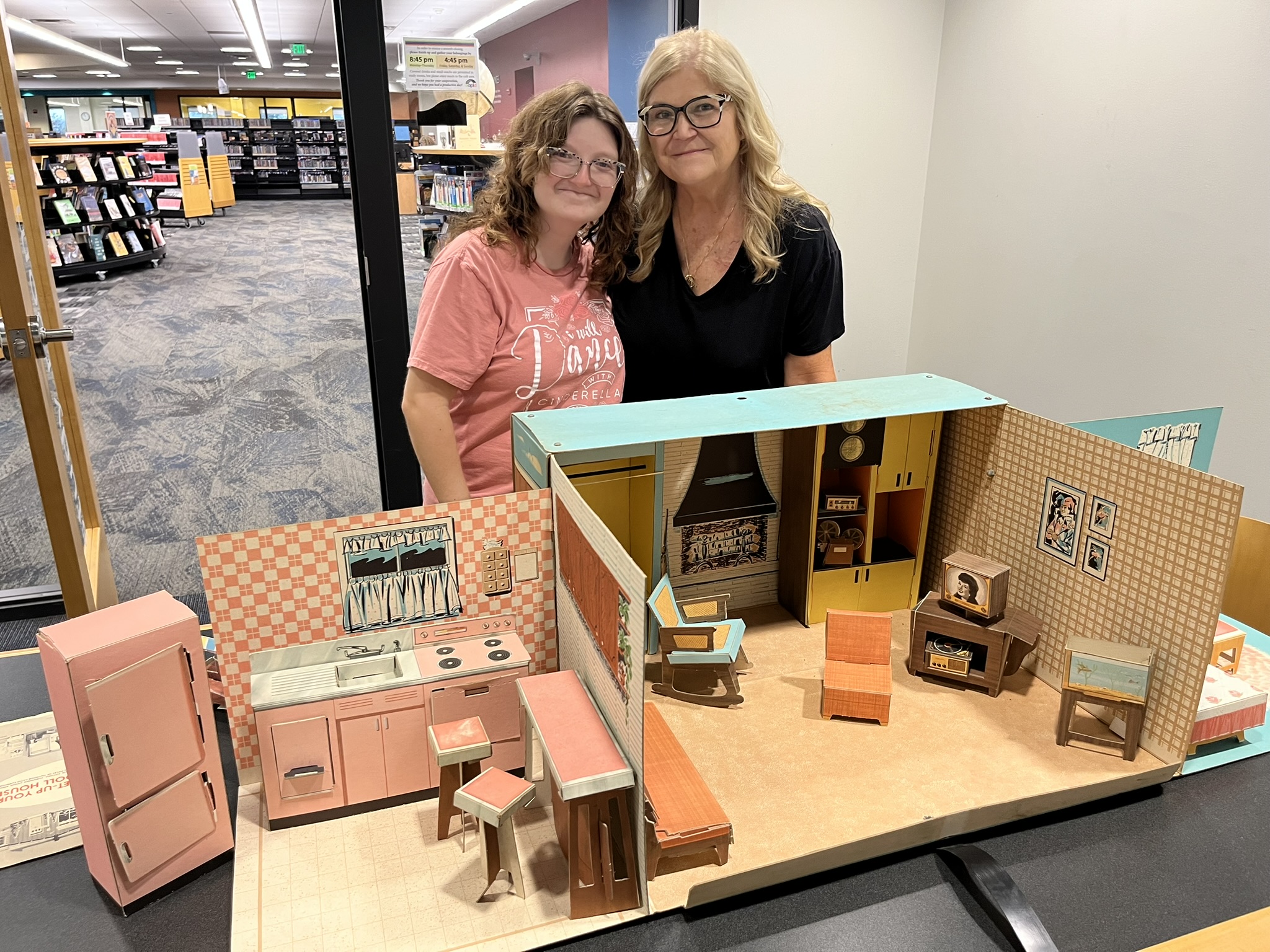
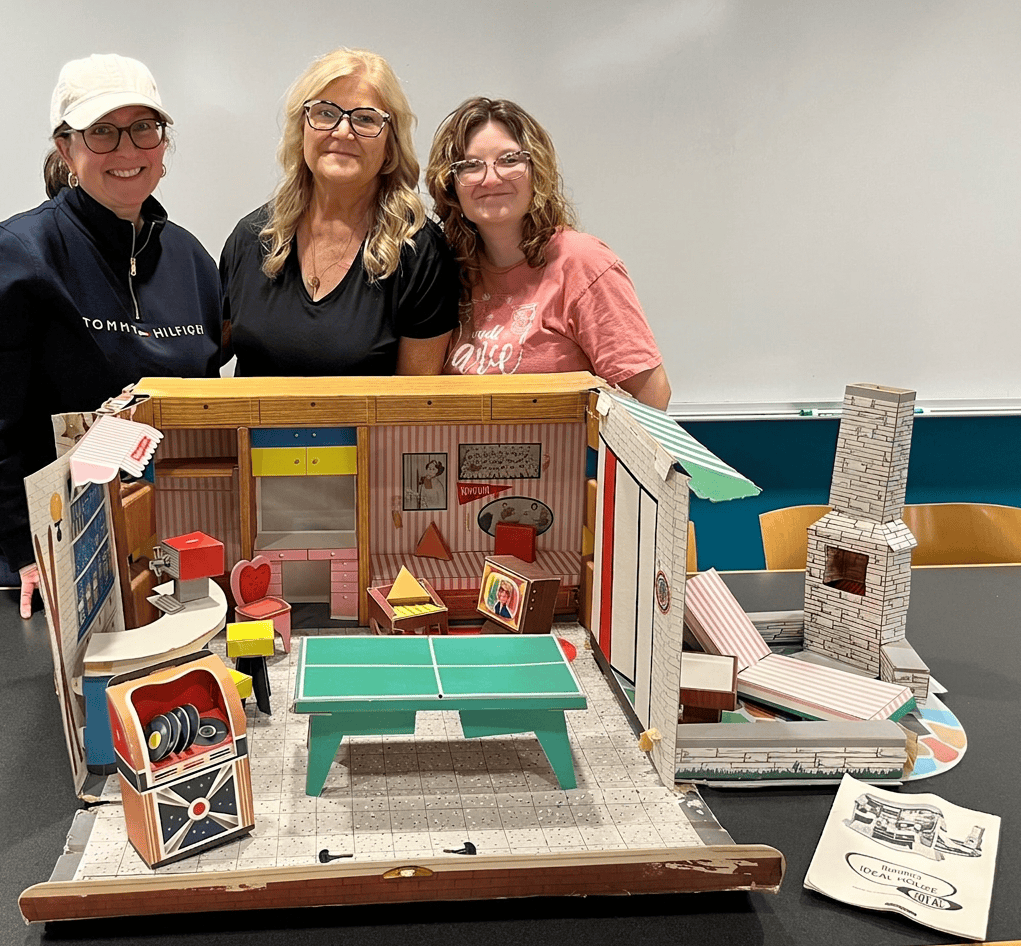
After we agreed to meet at the library so I could take a closer look at Tammy’s Ideal Doll House, Sally and her daughter surprised me by bringing along another vintage dollhouse too!
Here’s my previous post – TAMMY’S IDEAL HOUSE: A LITTLE PIECE OF 1963
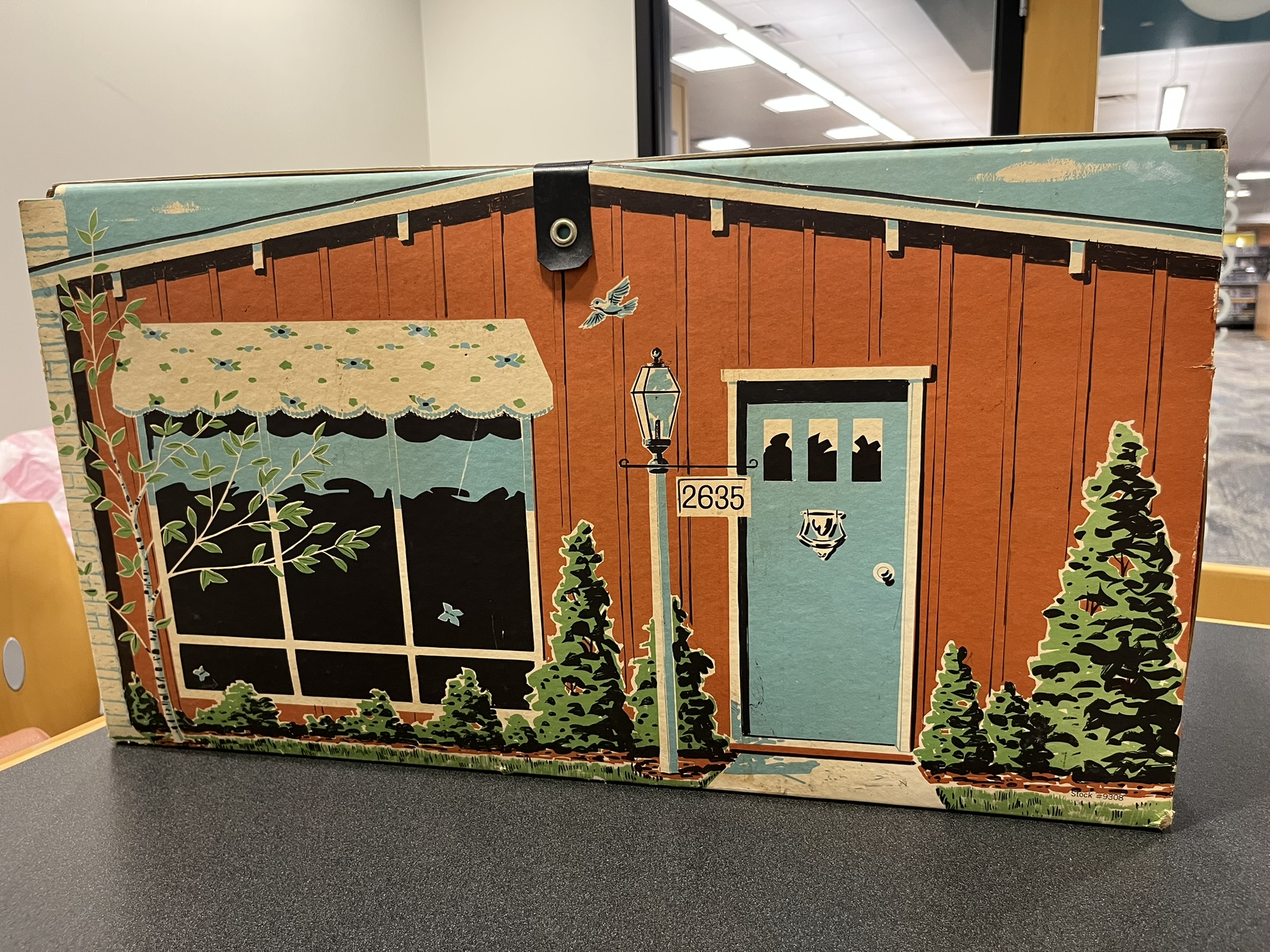
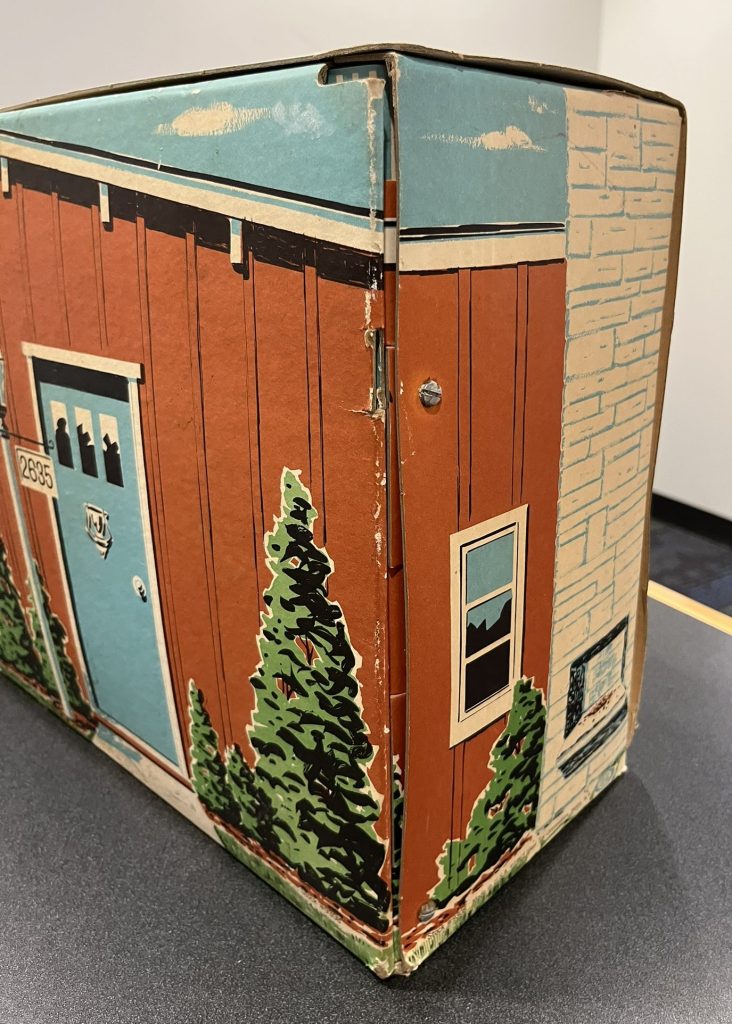
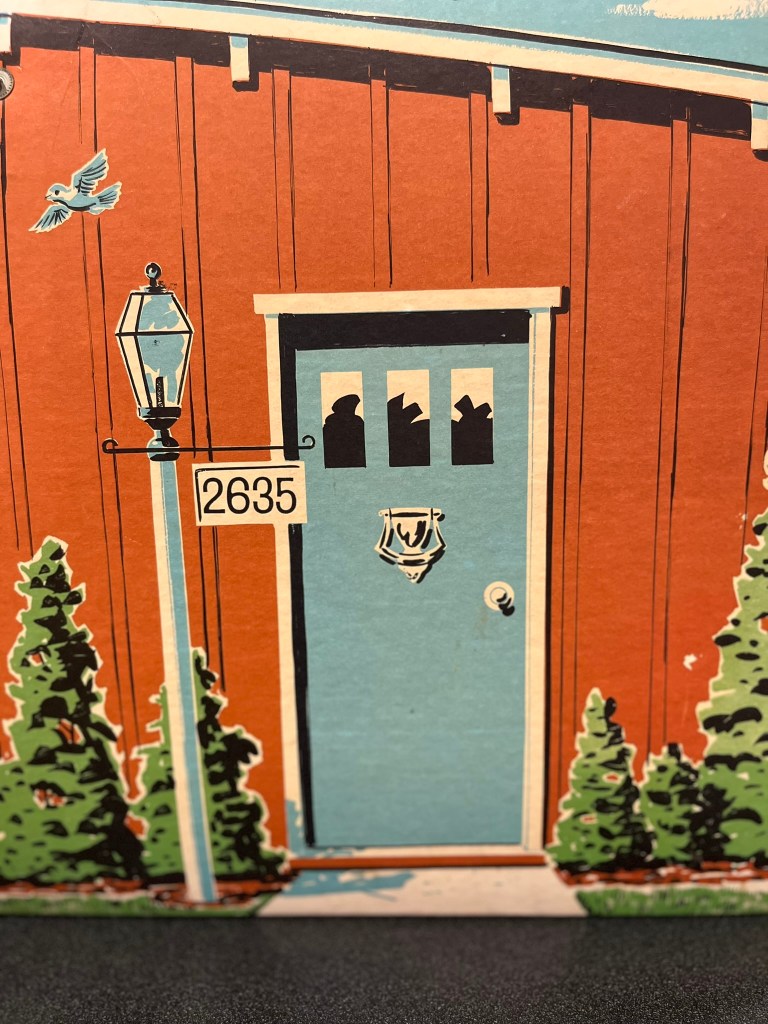
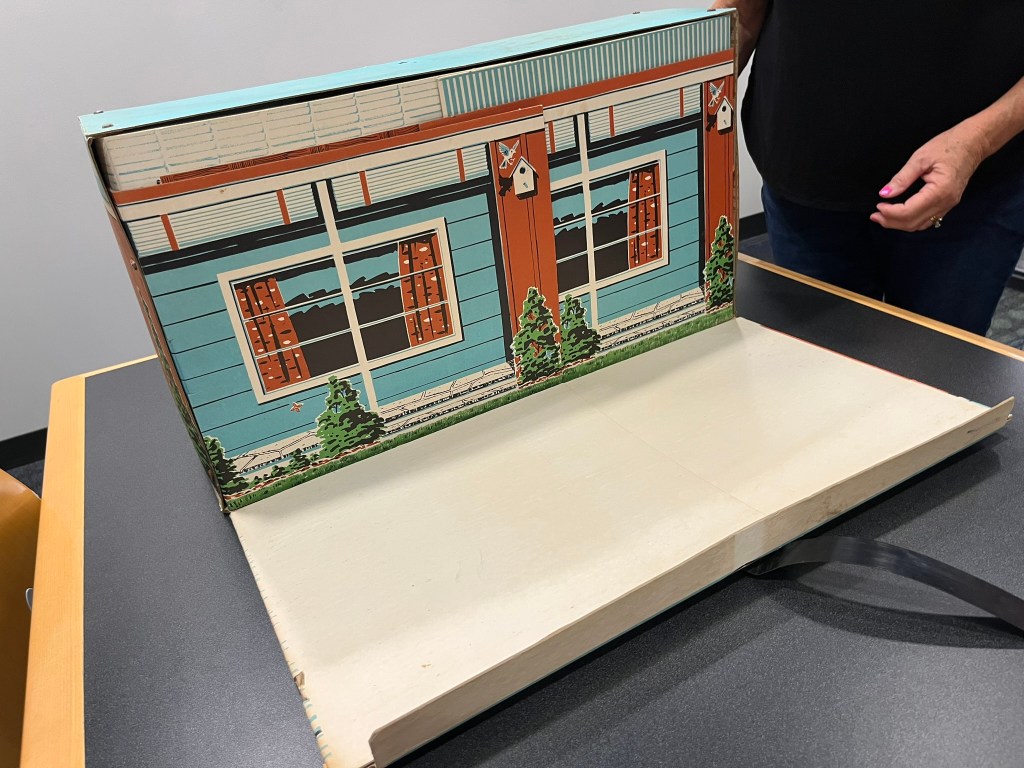
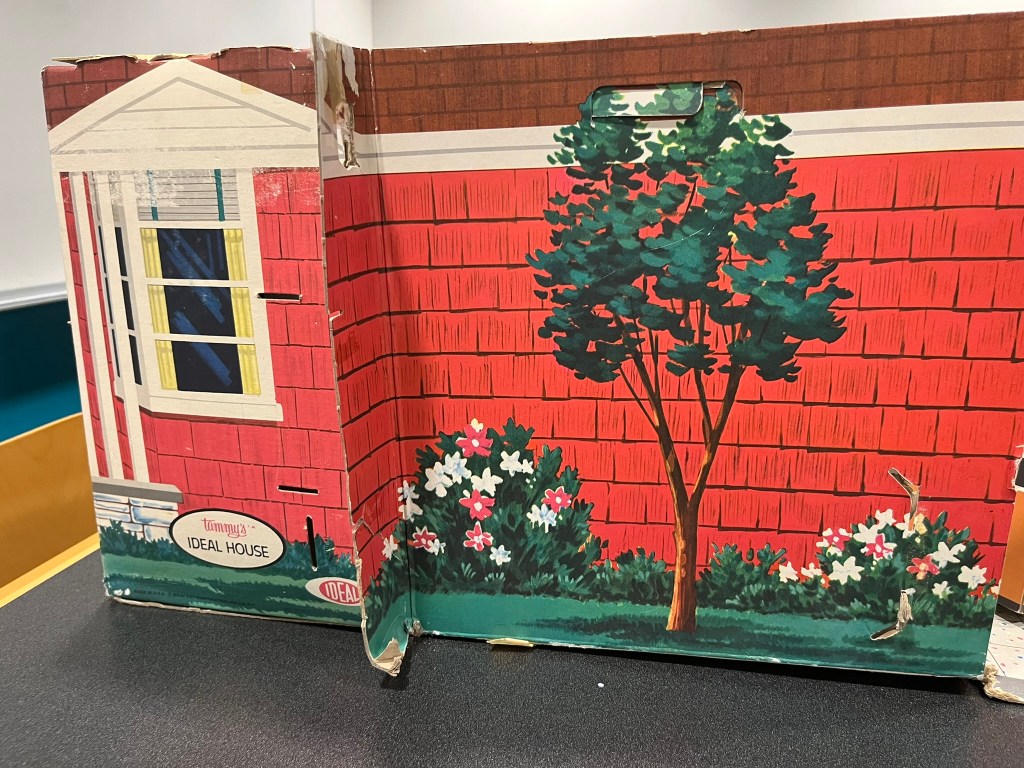
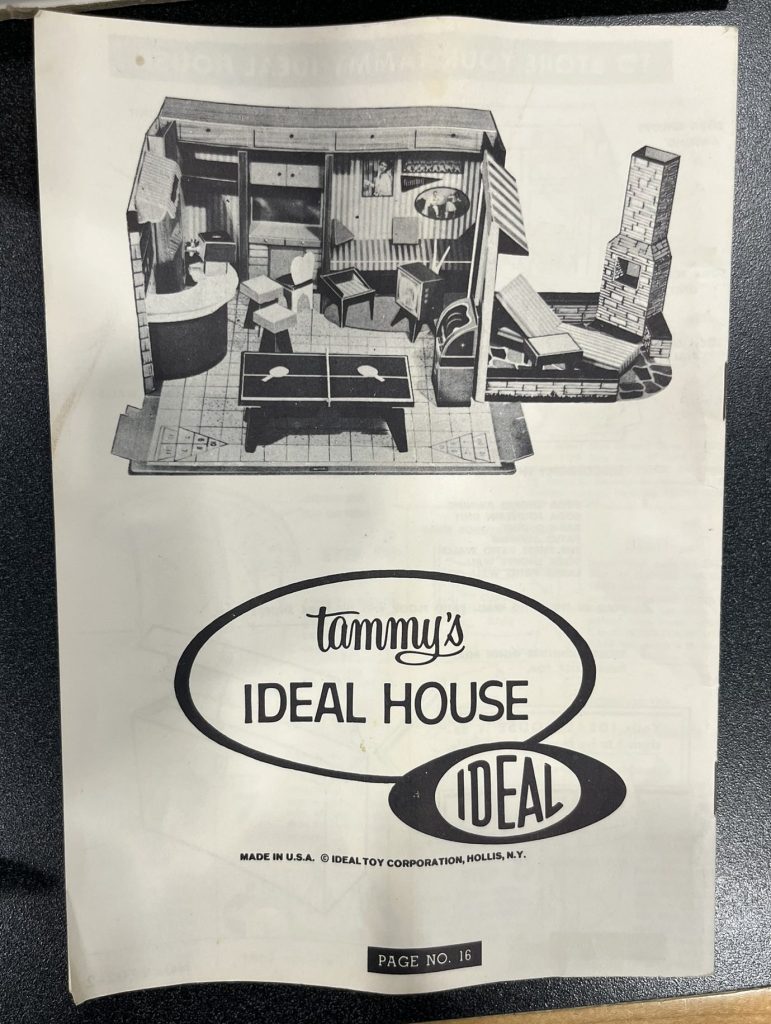
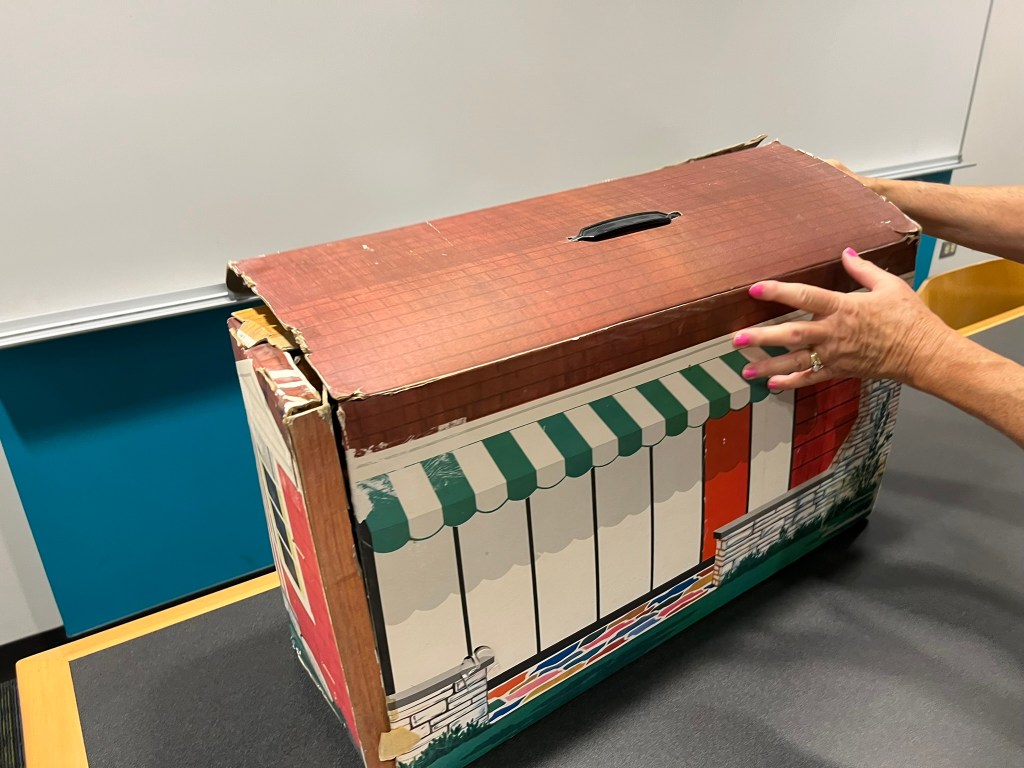
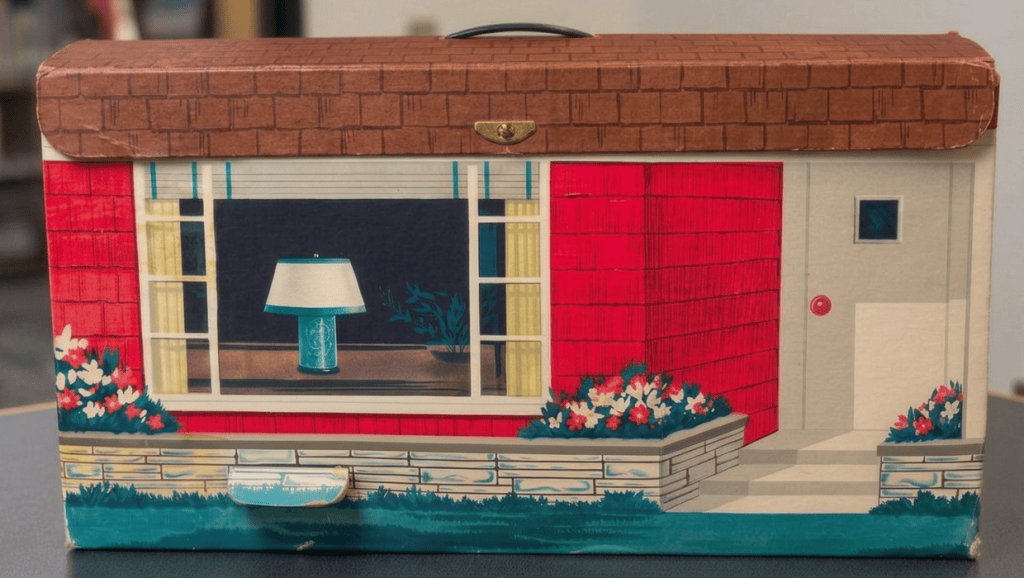
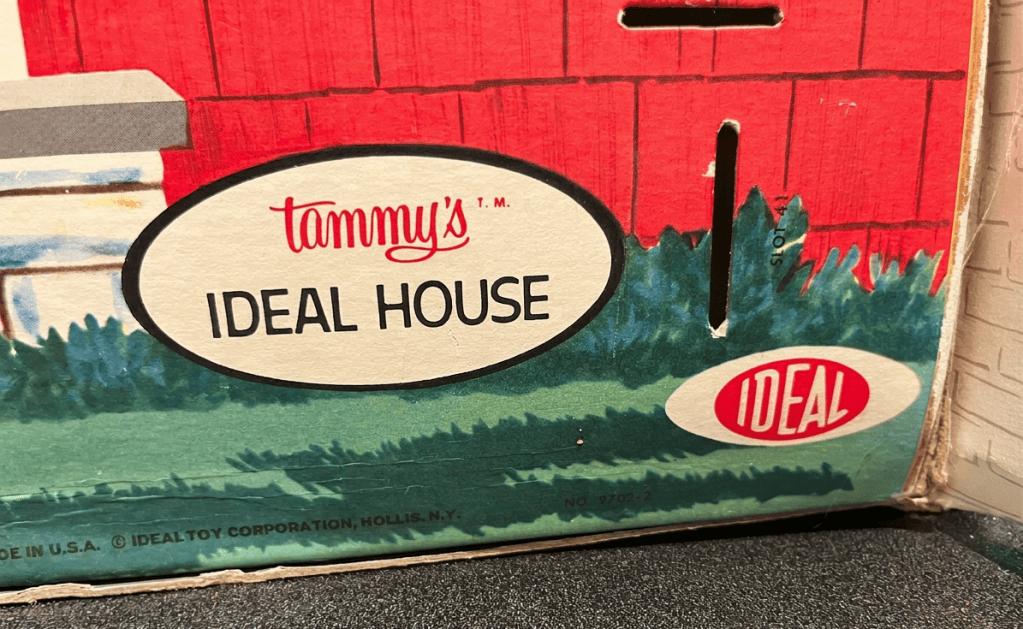
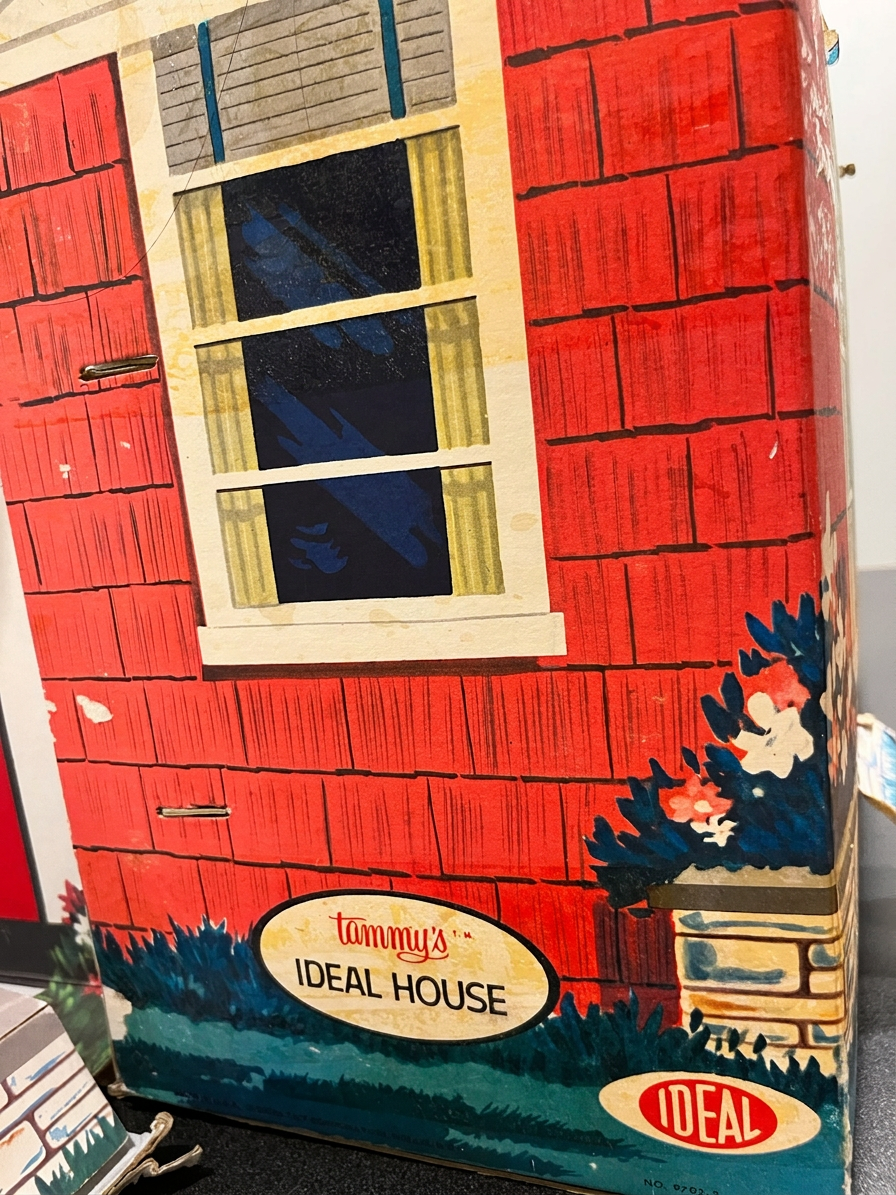
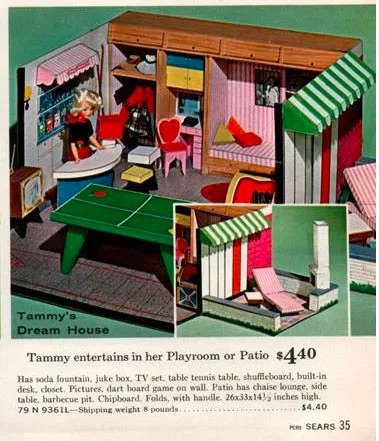
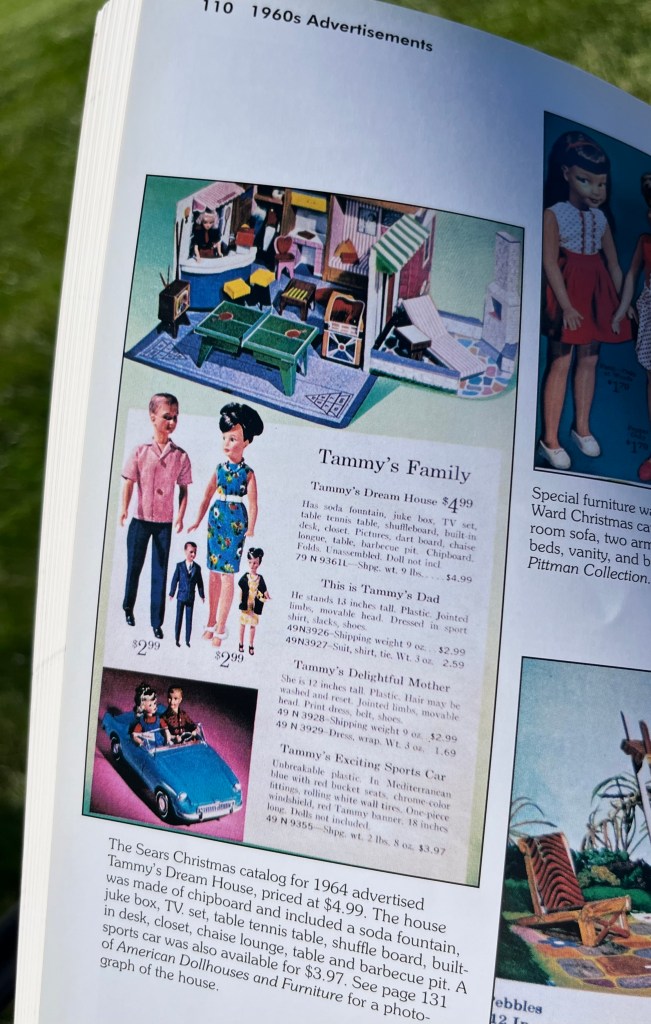
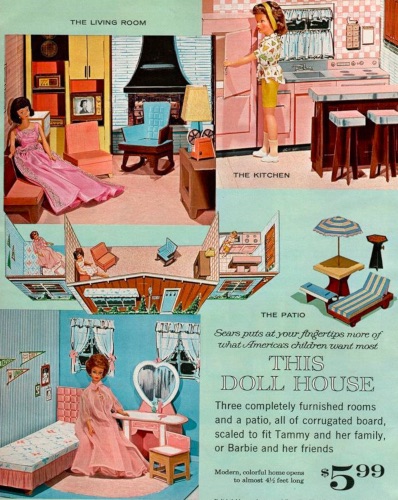
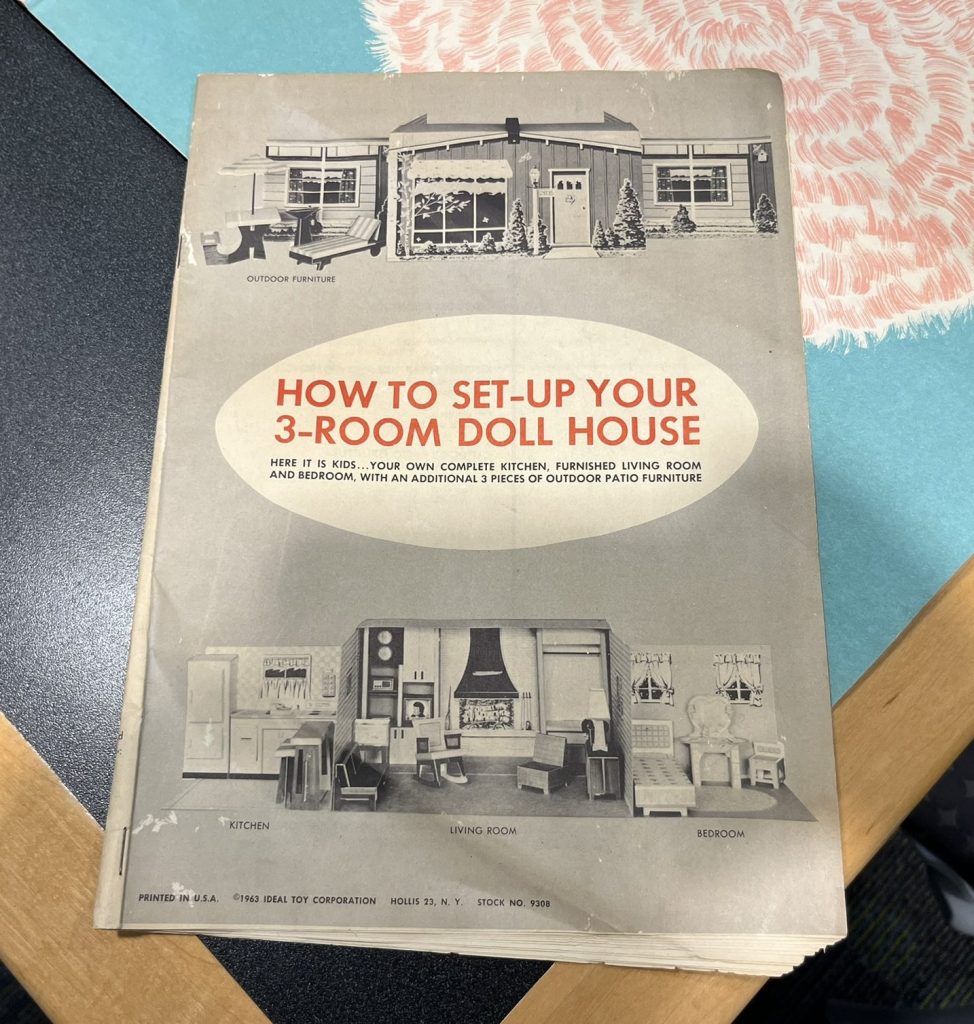
After doing some research online, I was able to identify it as the 1963 Ideal Doll House, produced by Ideal Toy Corporation and sold through Sears. And here’s the part I love: Sears didn’t limit it to just one doll line. The house was advertised as being suitable for Tammy and her family—or Barbie and her friends.
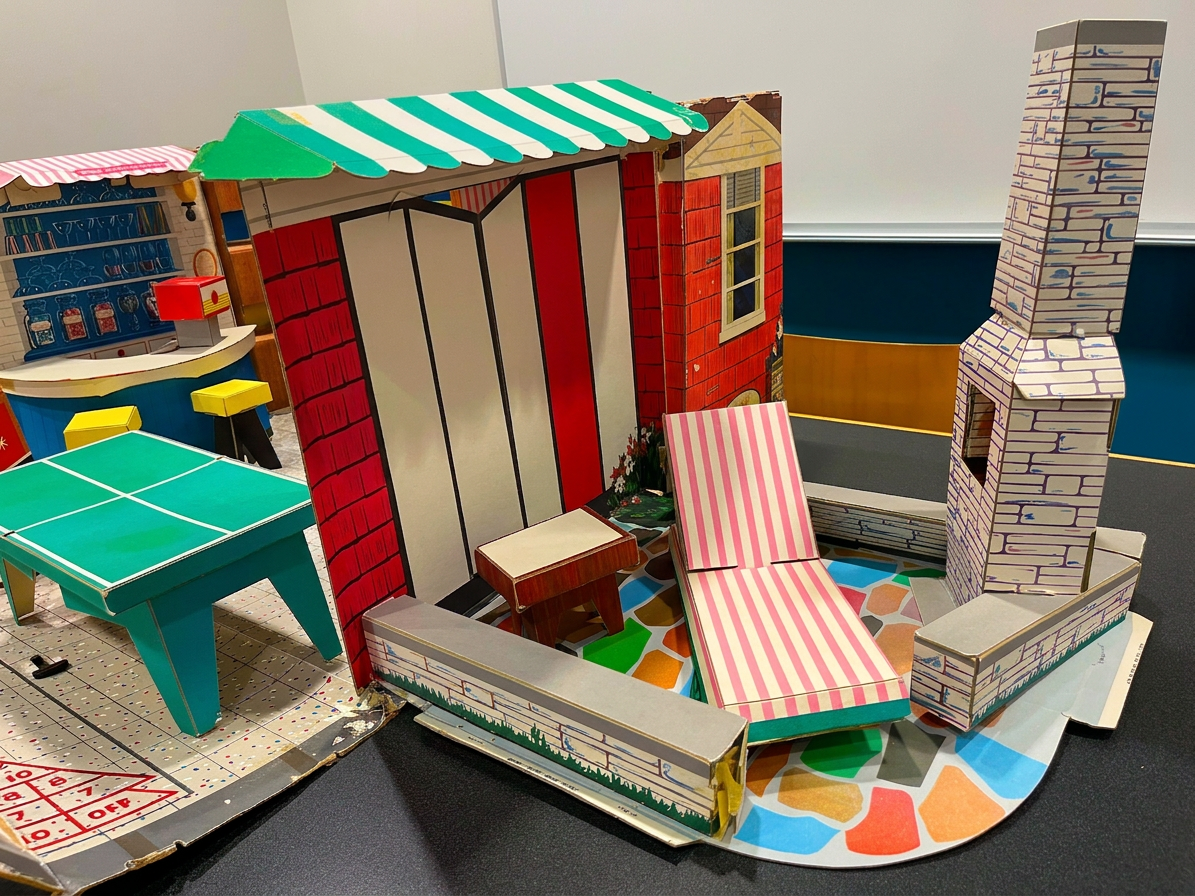
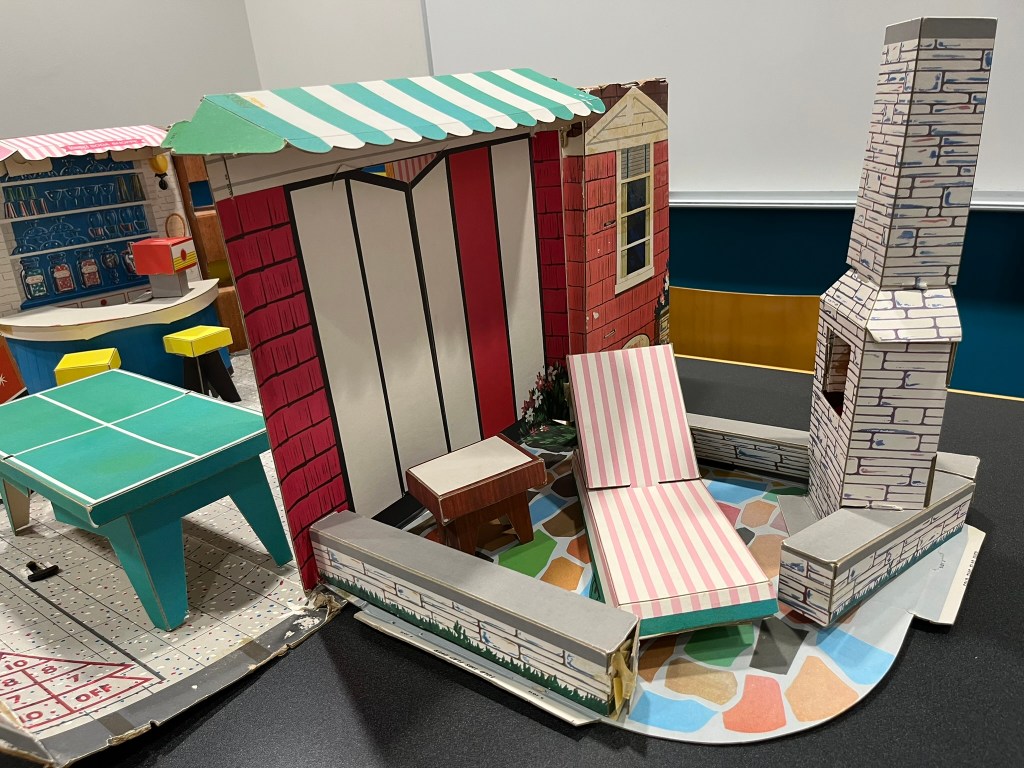
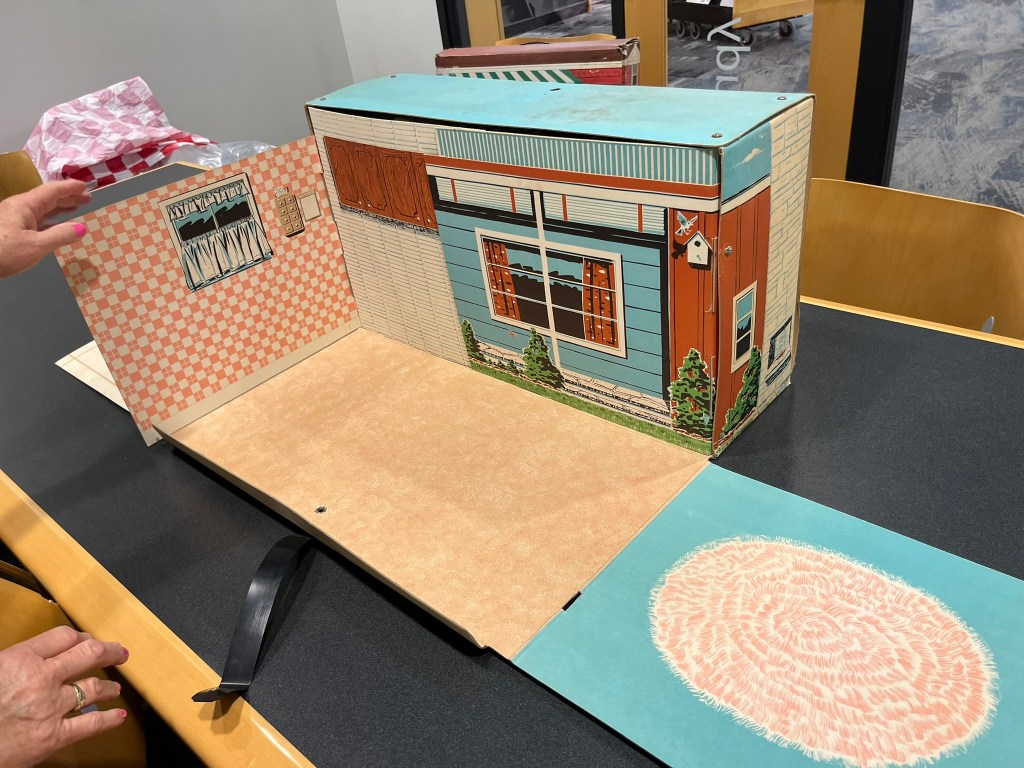
The original Sears advertisement offered three completely furnished rooms and a patio, with the entire house opening to almost four and a half feet long.
The price? $5.99.
Yes. An entire furnished mid-century dollhouse for $5.99!
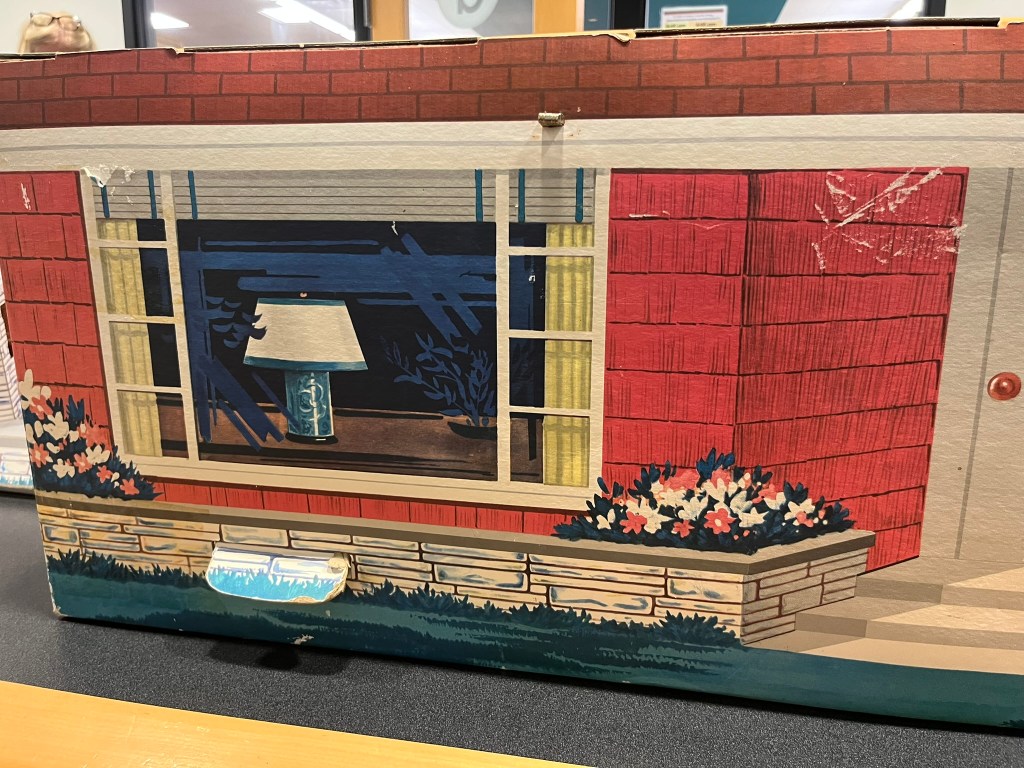
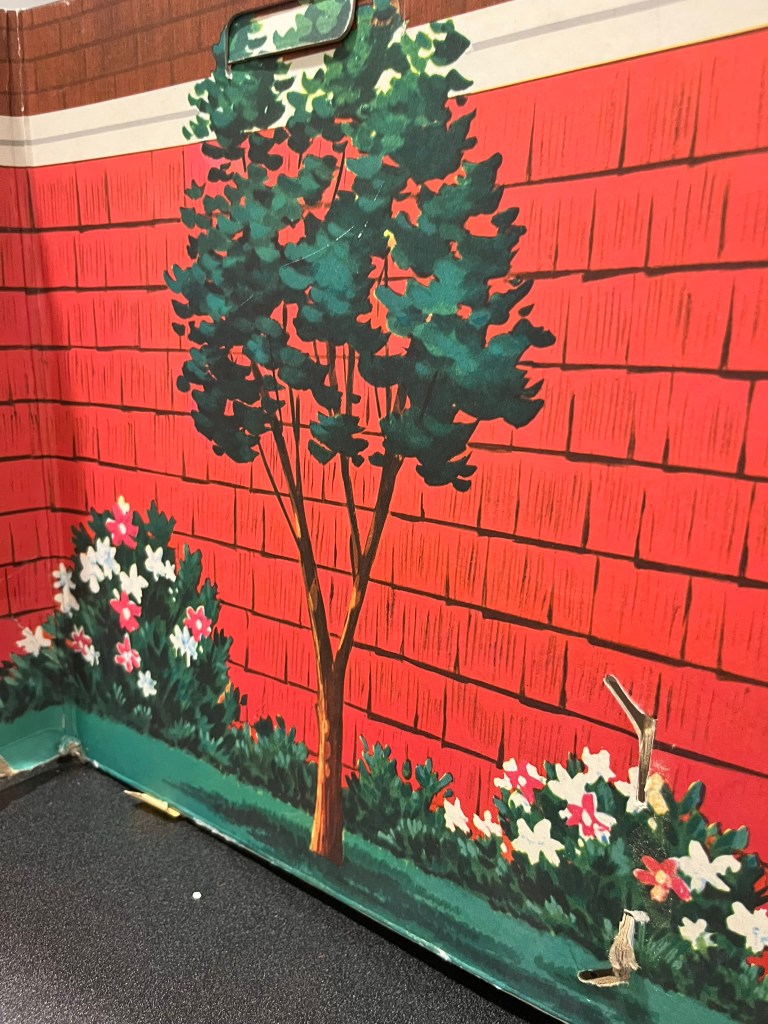
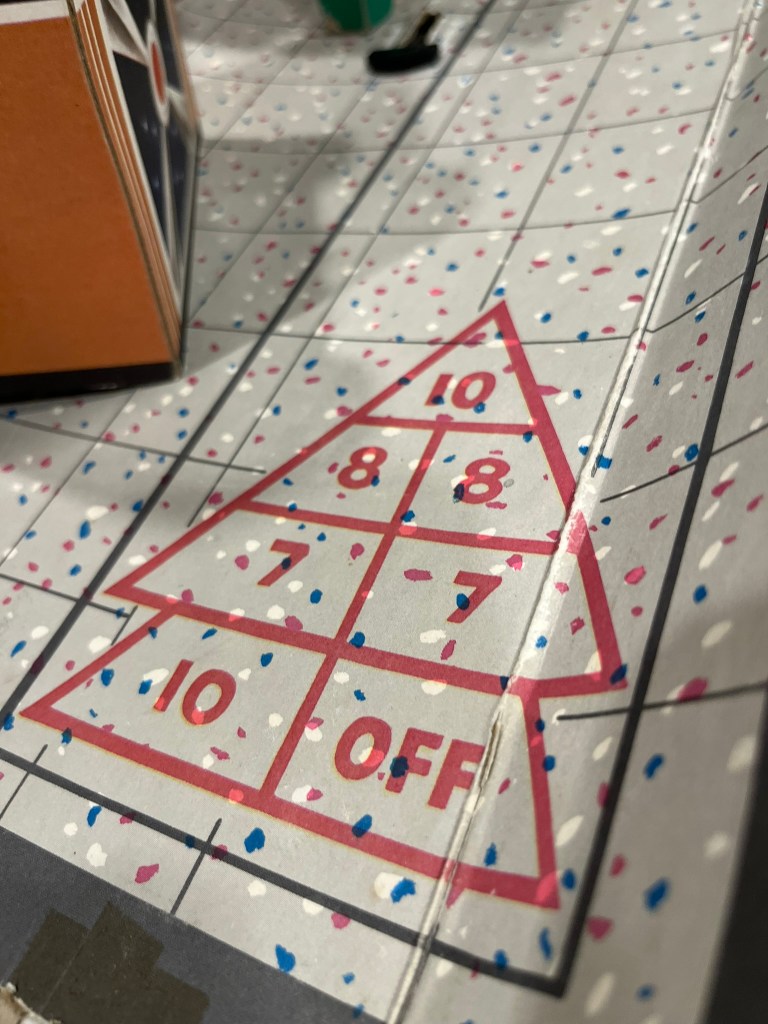
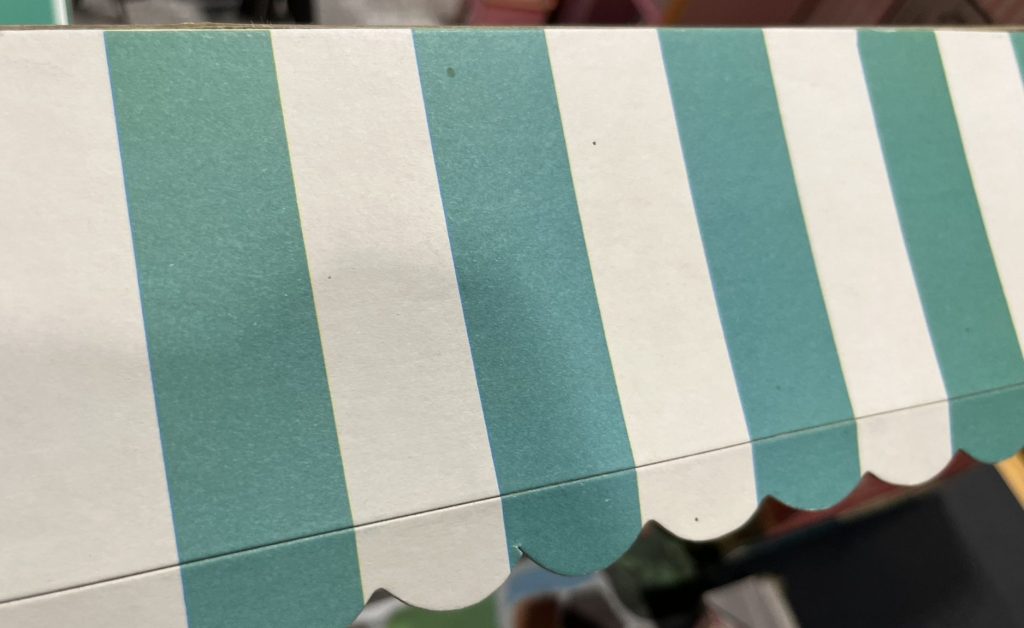
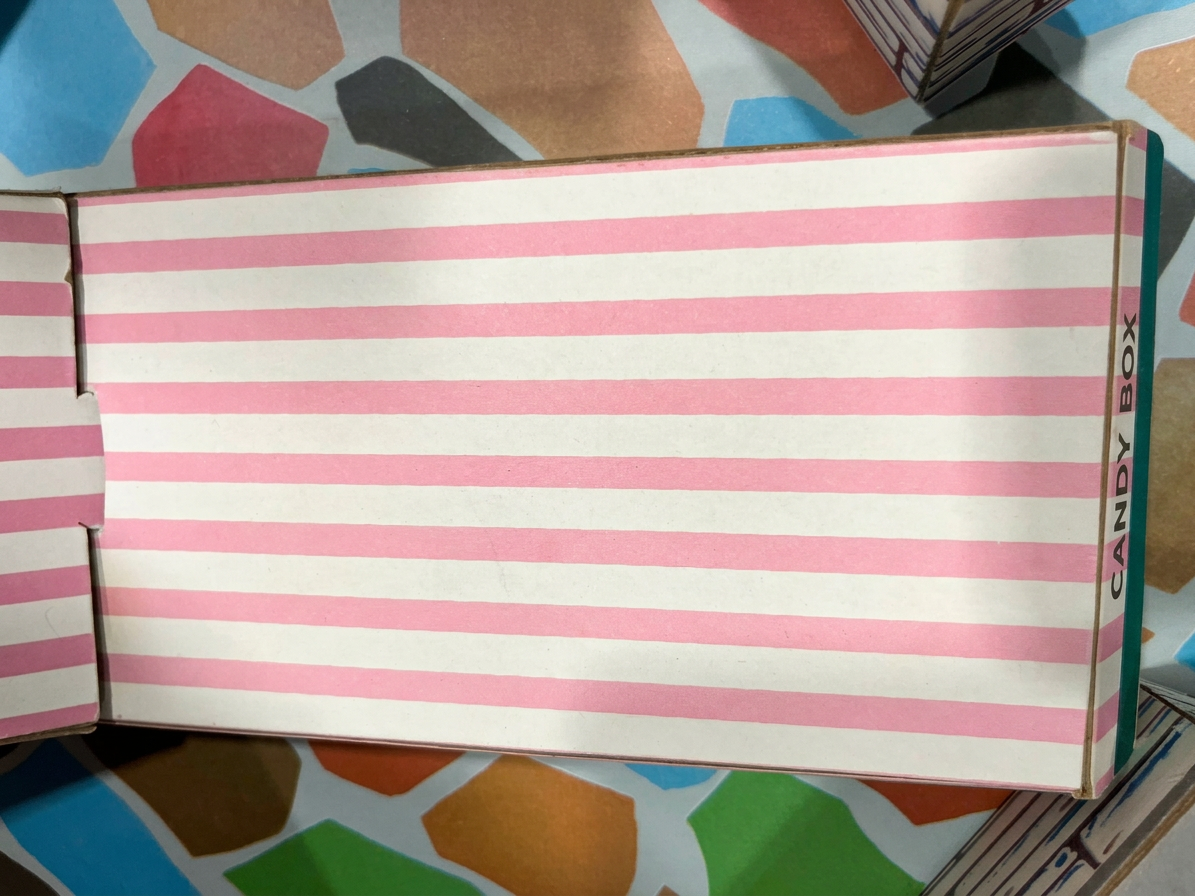
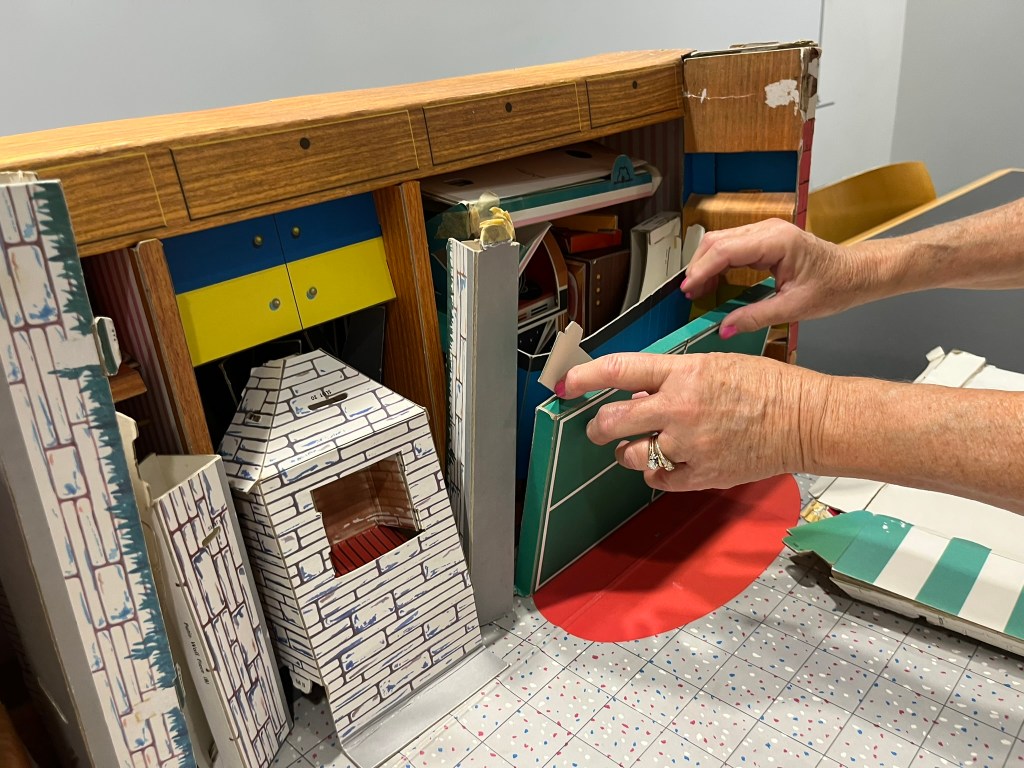
It’s amazing how much of this little printed cardboard house has survived, remarkably complete and well-preserved after more than 60 years.
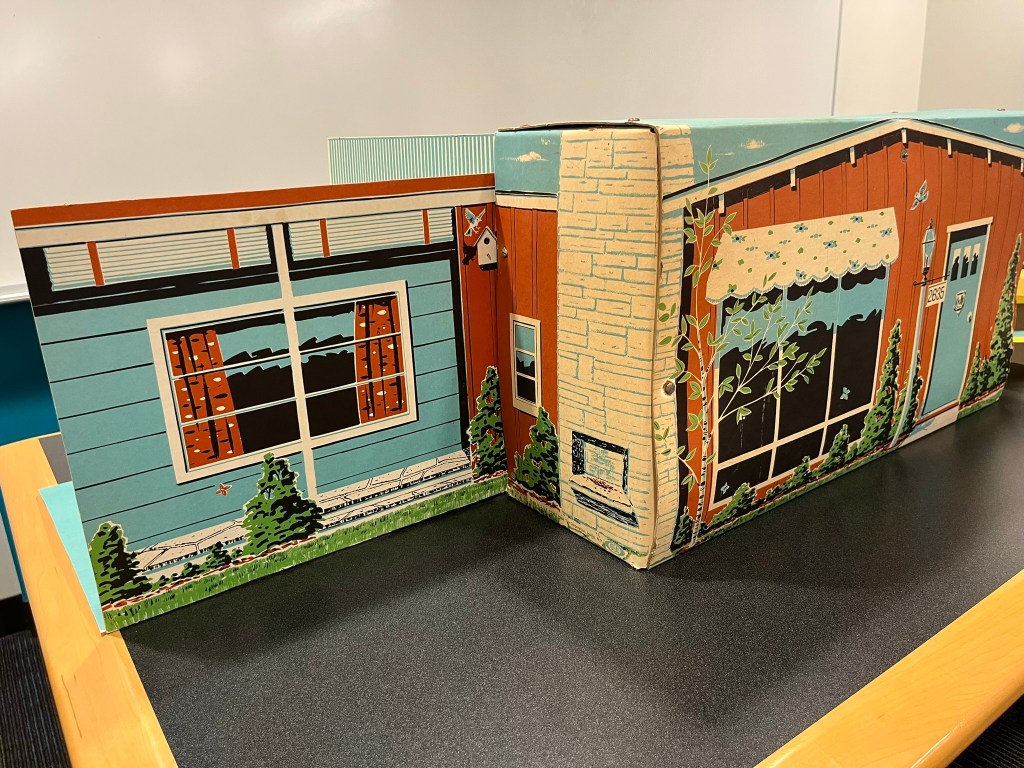
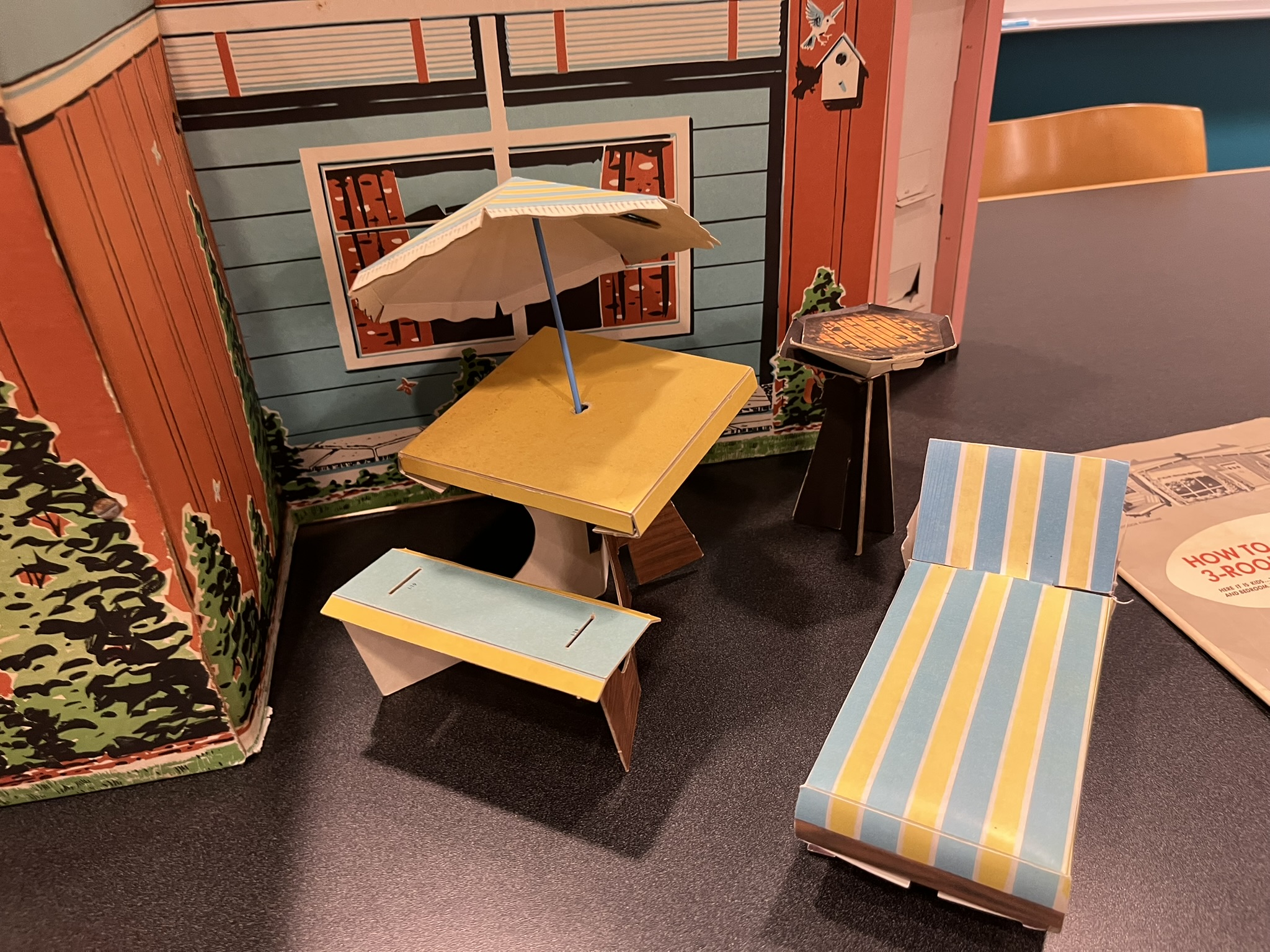
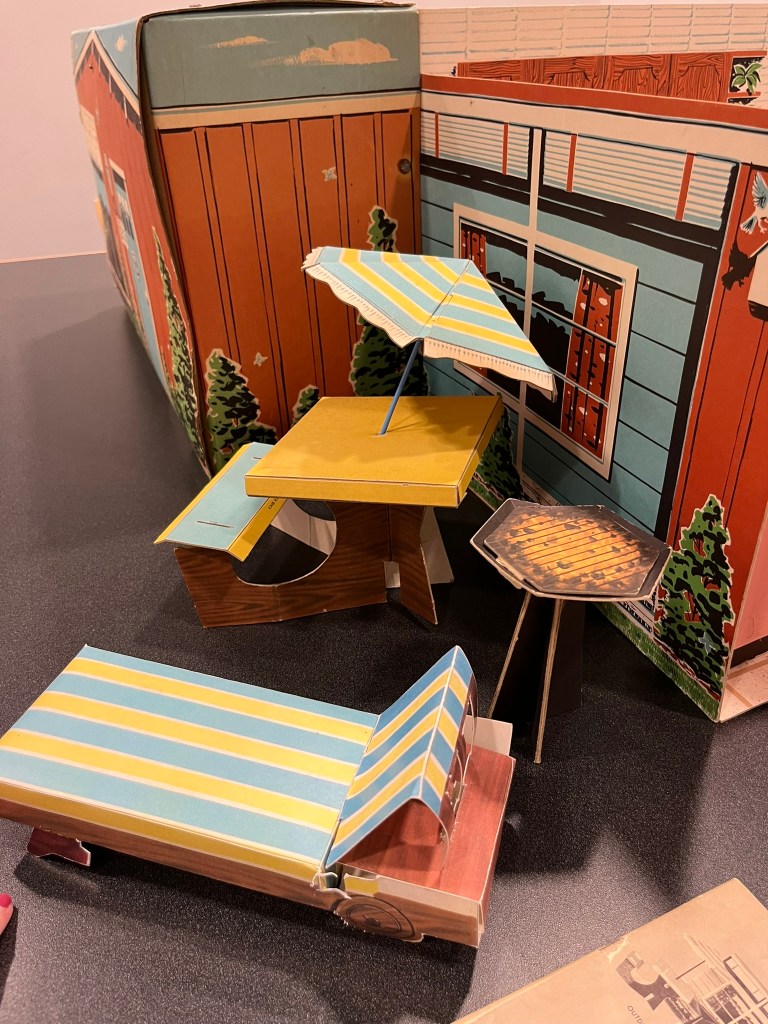
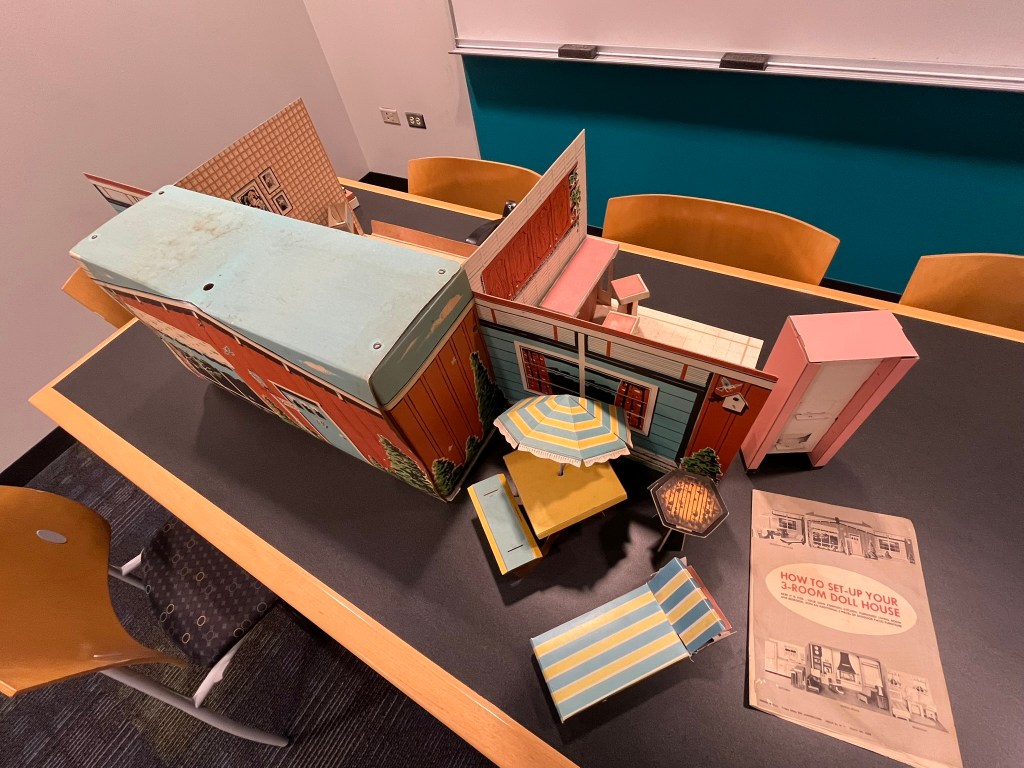
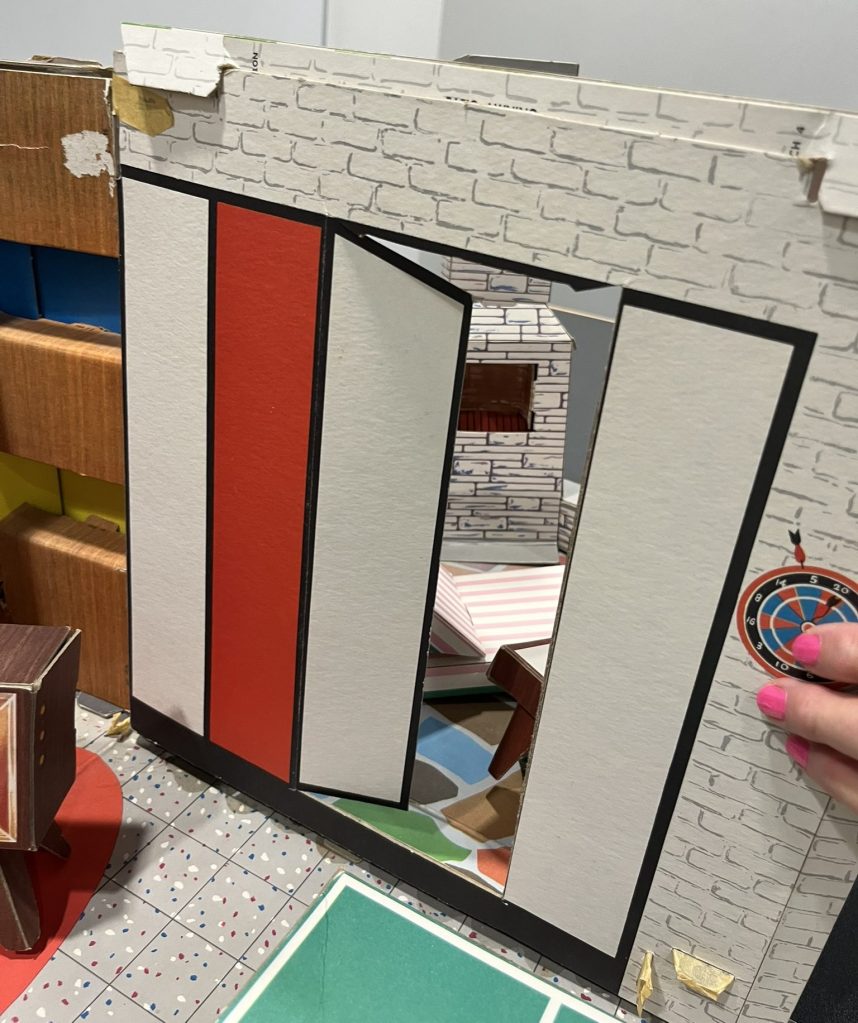
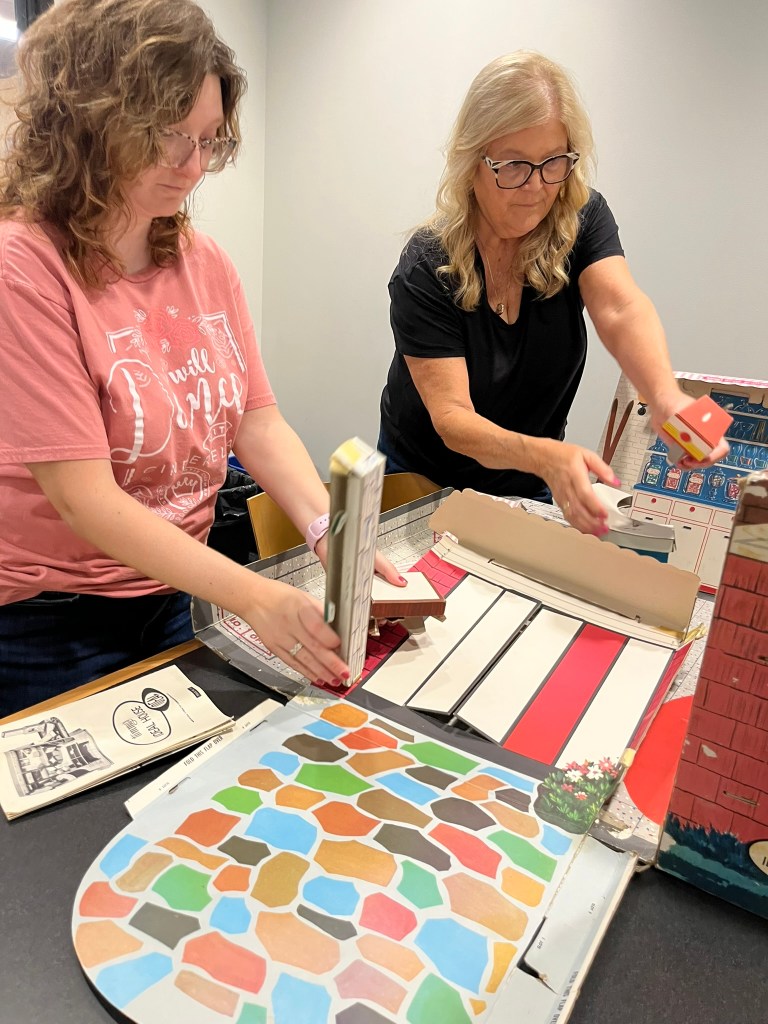
When fully opened, this impressive cardboard dollhouse stretched nearly 4½ feet long!
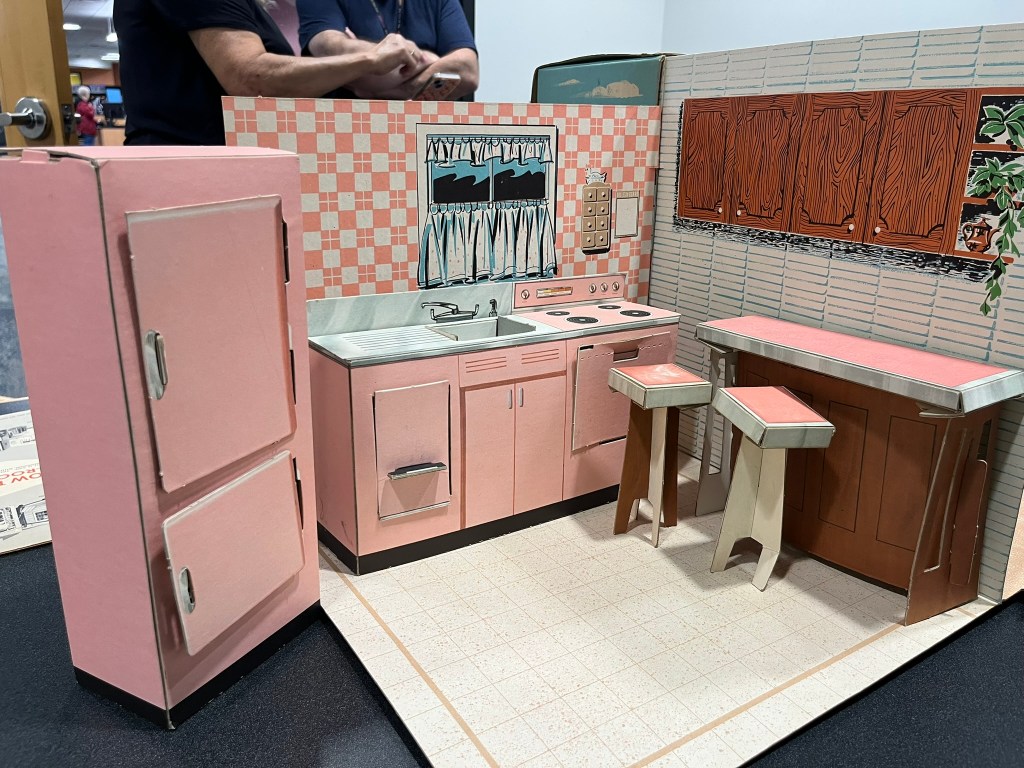
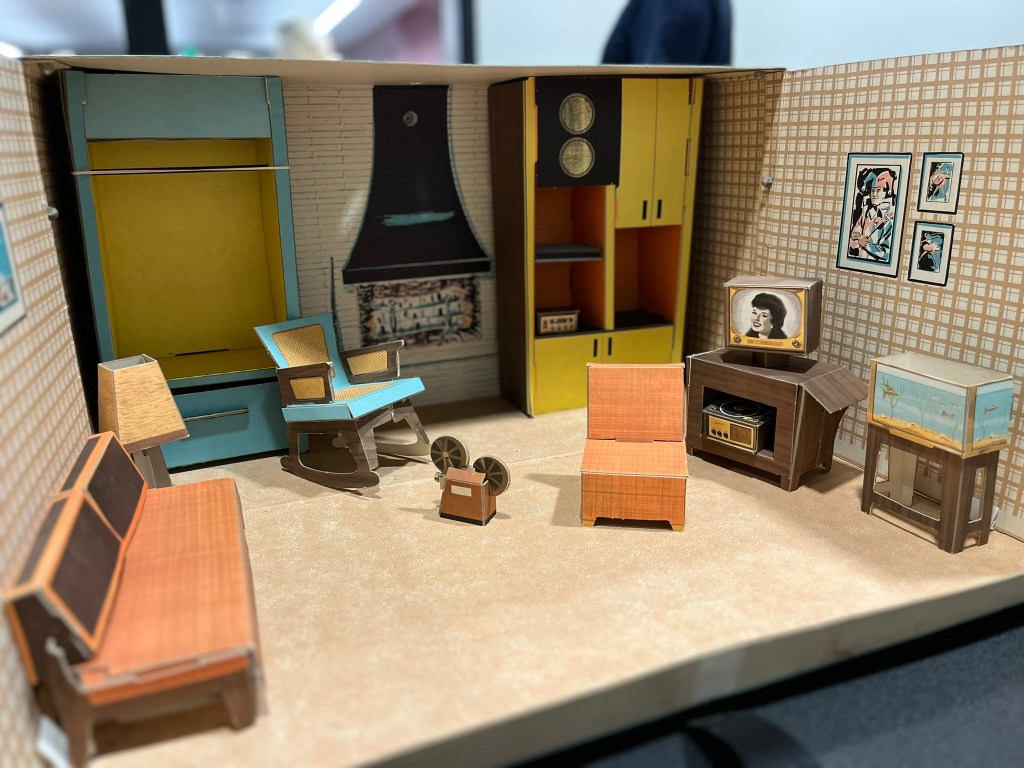
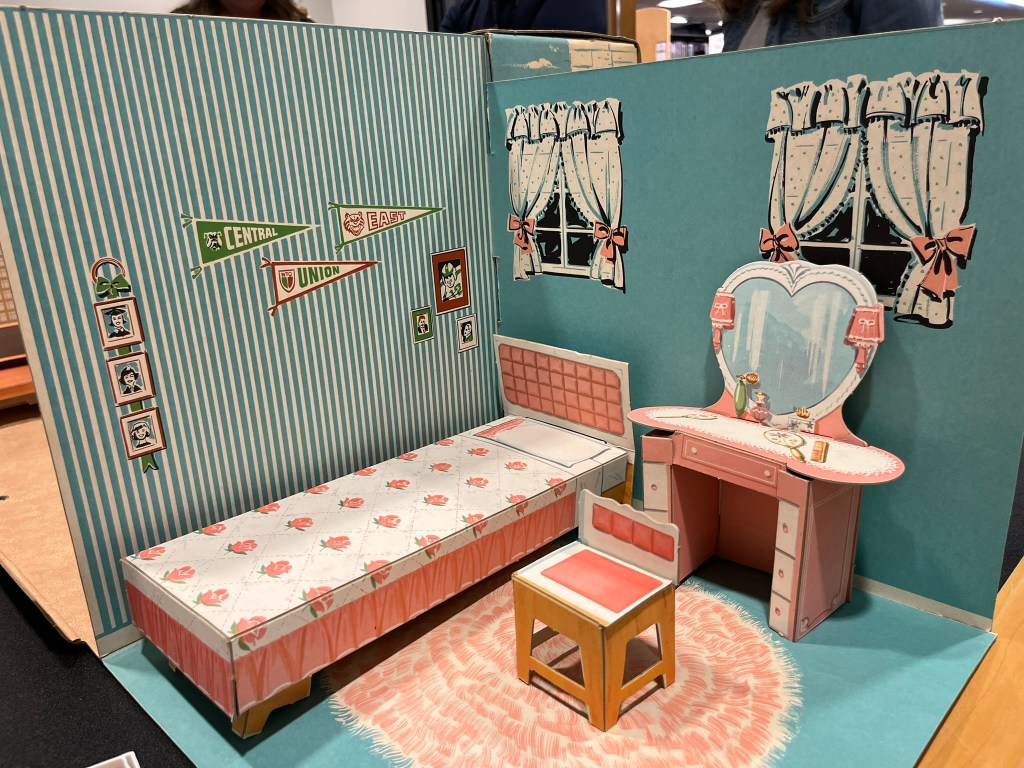
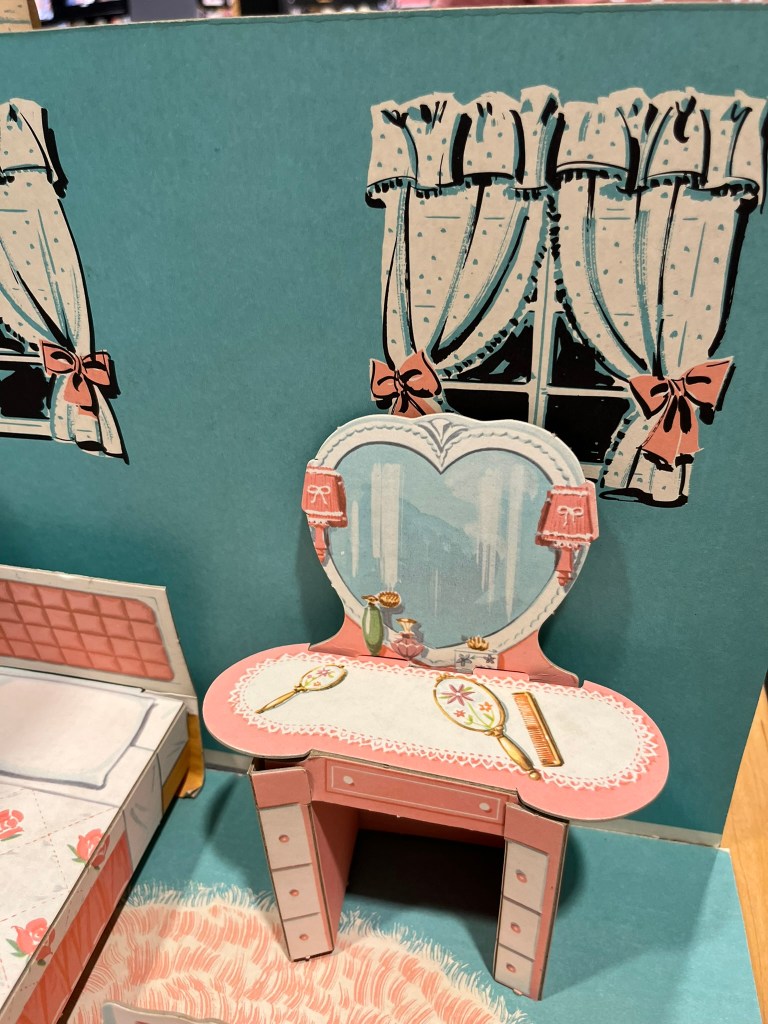
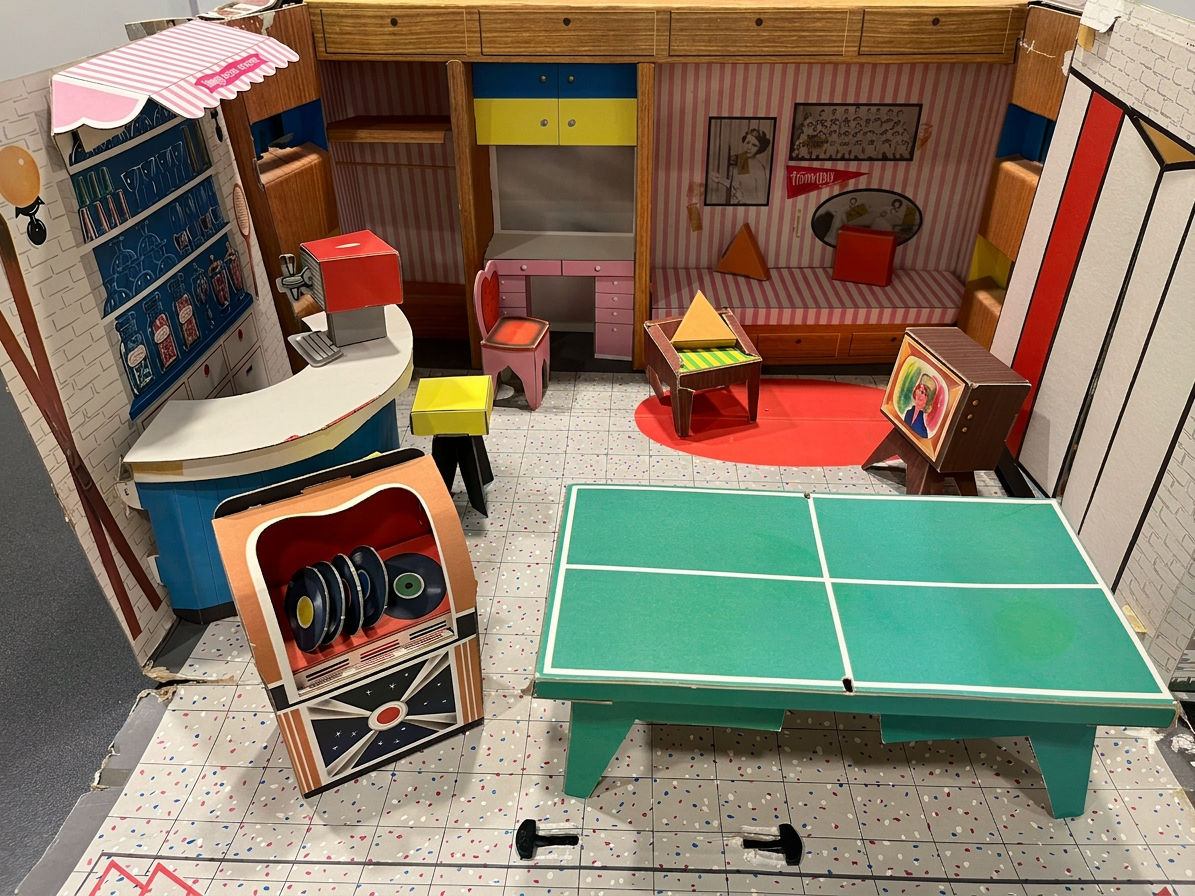
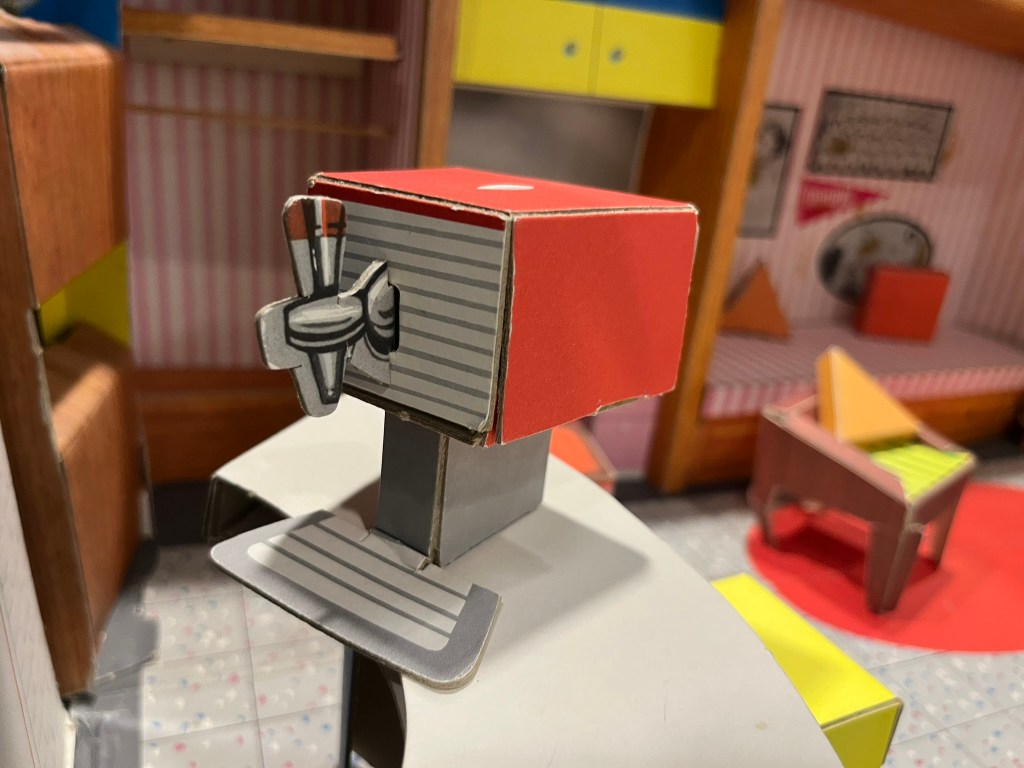
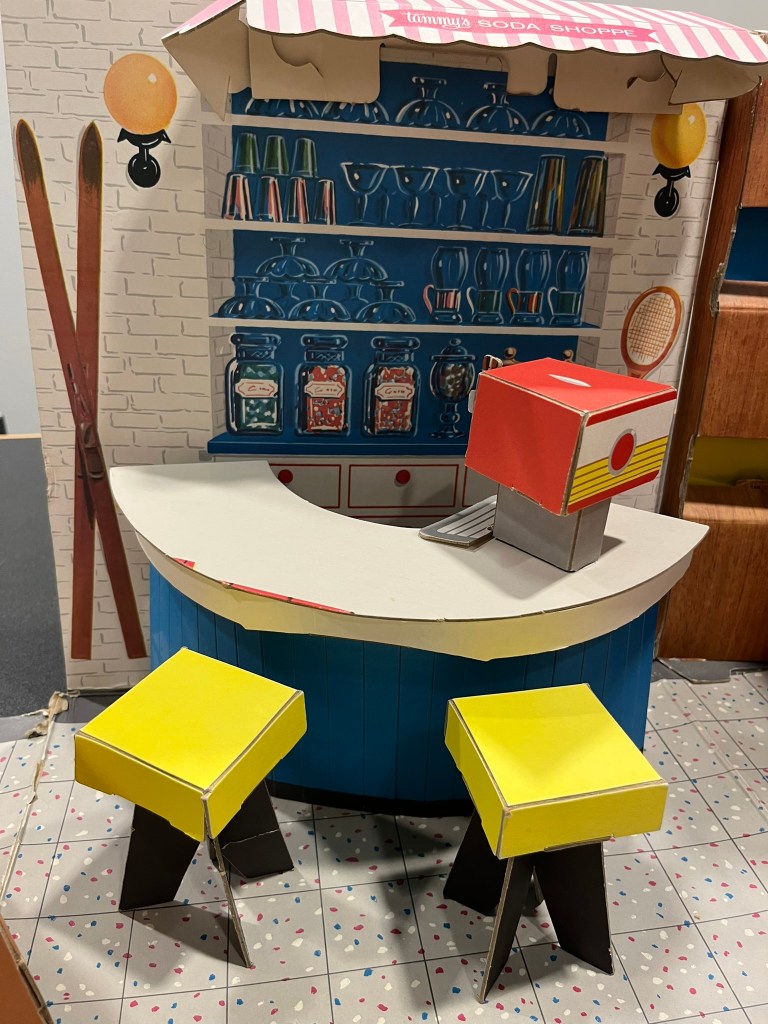
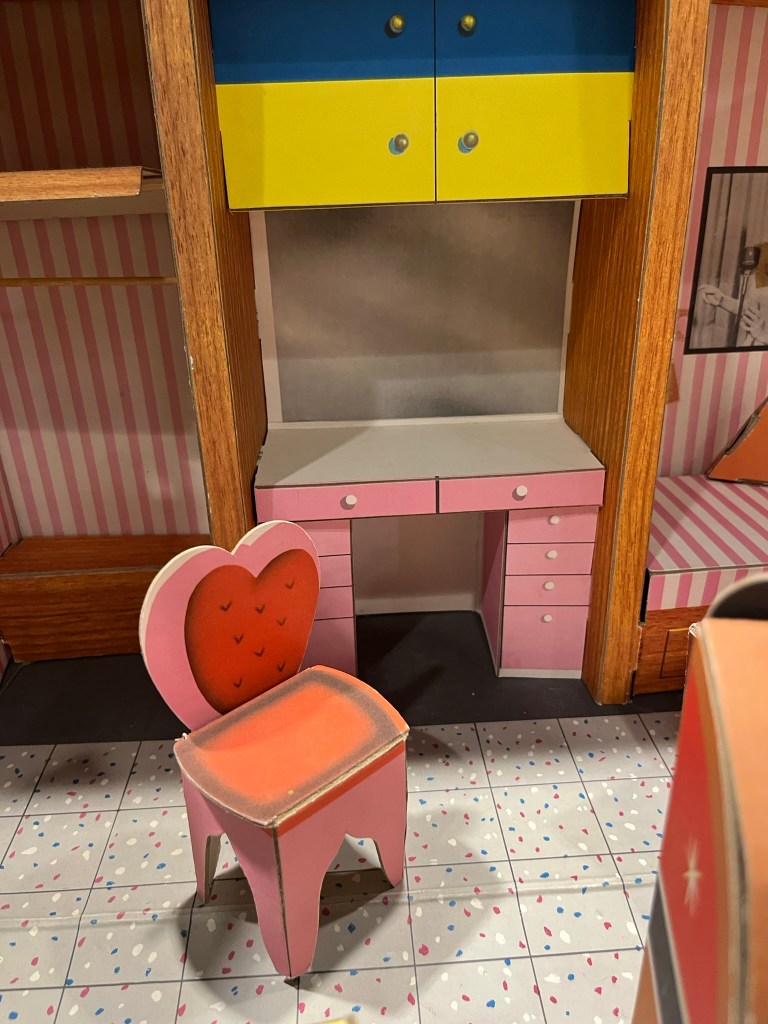
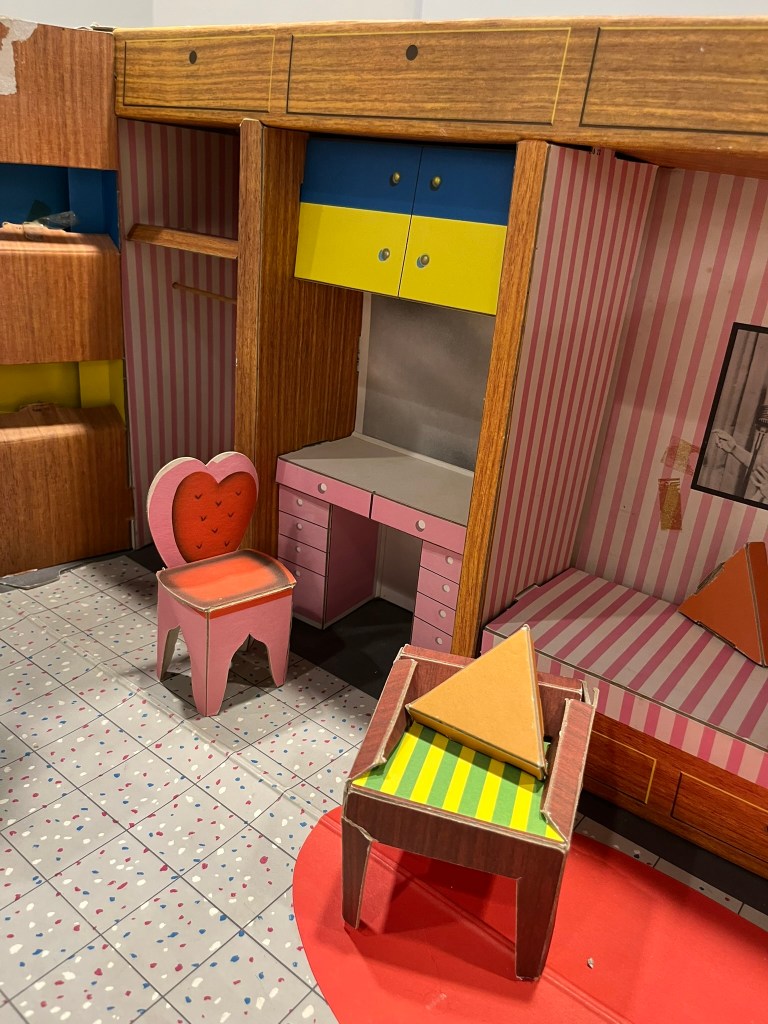
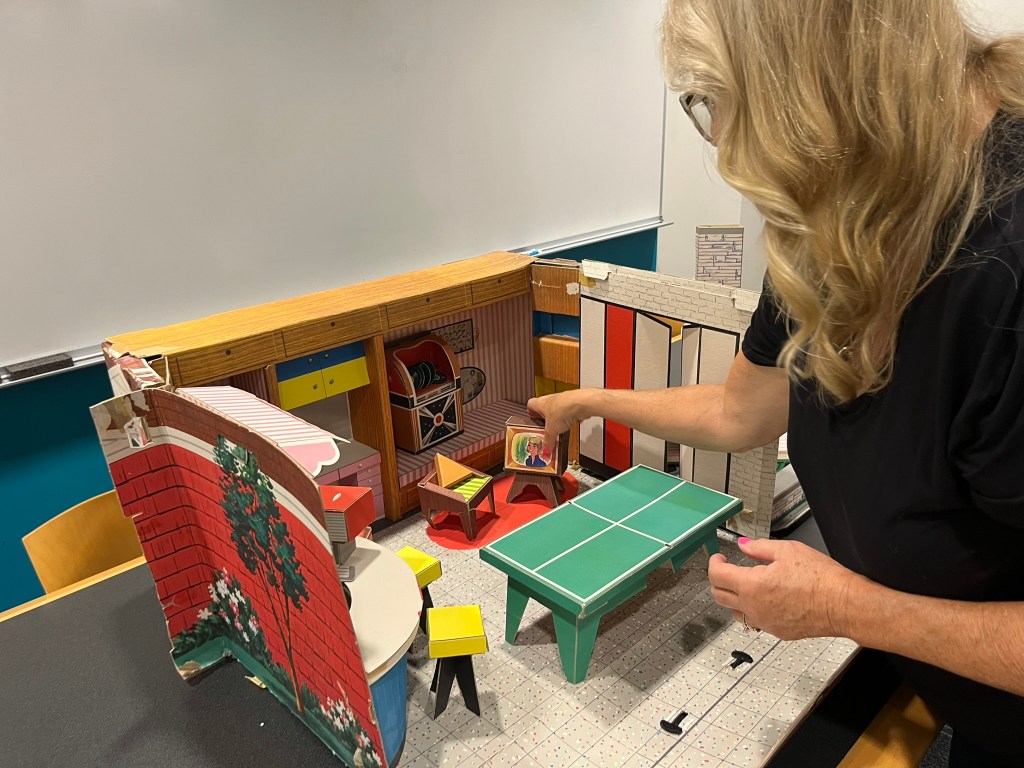
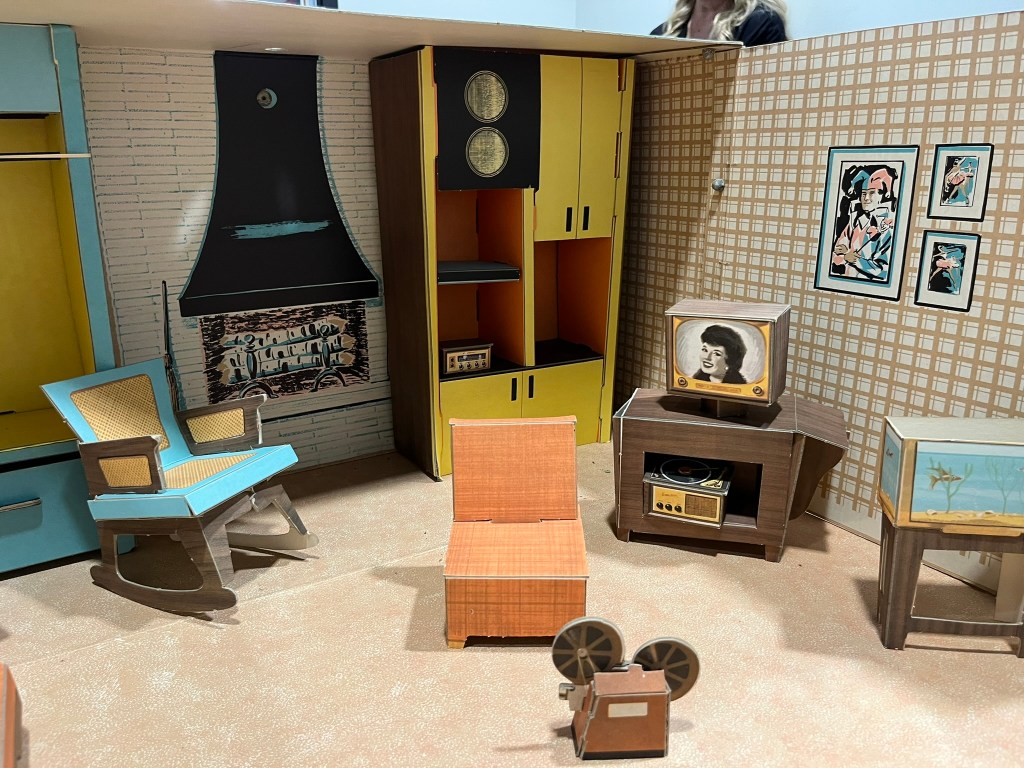
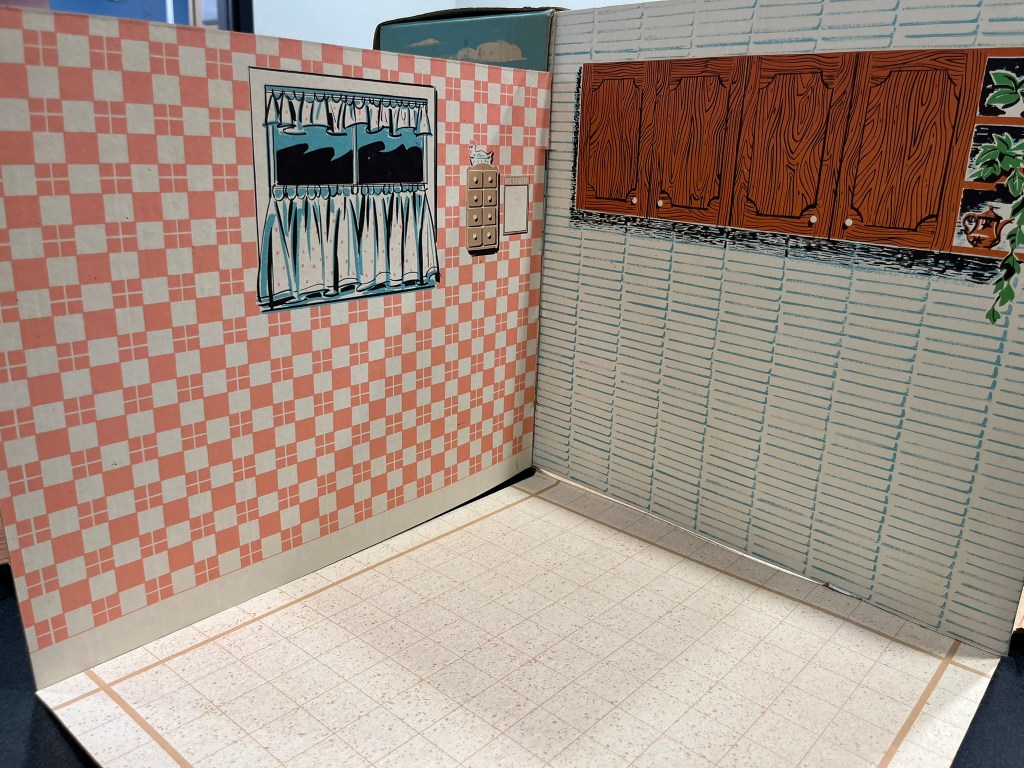
The pink refrigerator is still there. So are the kitchen cabinets, stove, breakfast bar and stools. The bedroom still has its bed and wonderful heart-shaped vanity. In the living room are pieces of wonderfully graphic mid-century furniture, along with a television, record player, reel-to-reel machine and that fabulous black fireplace.
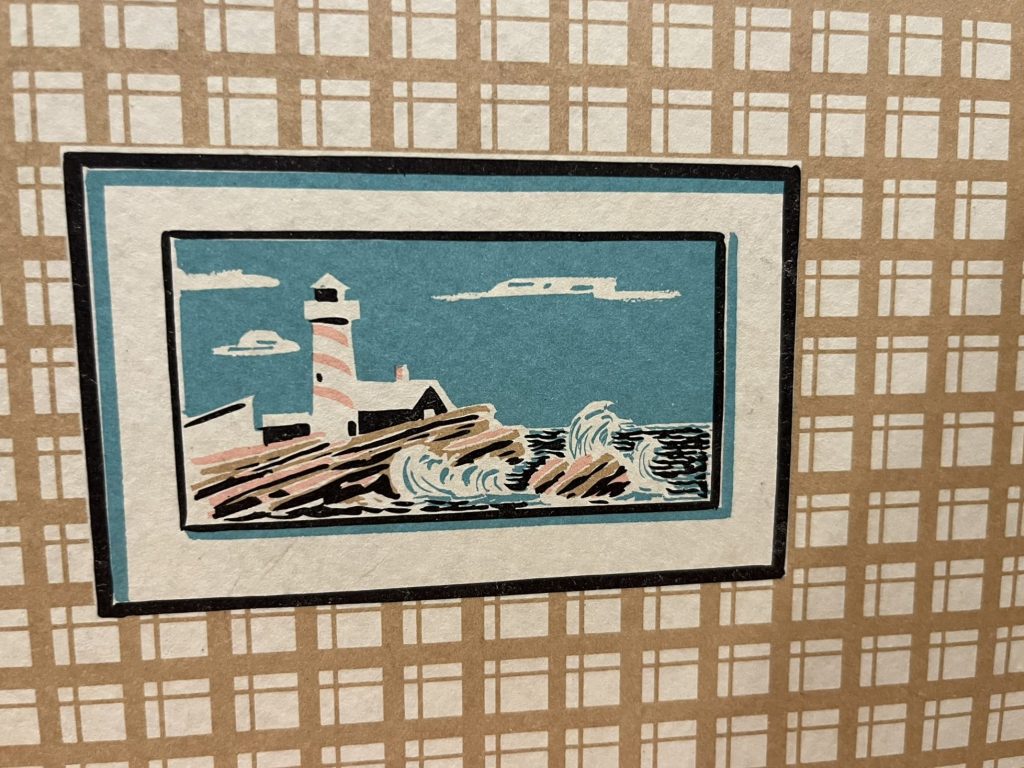
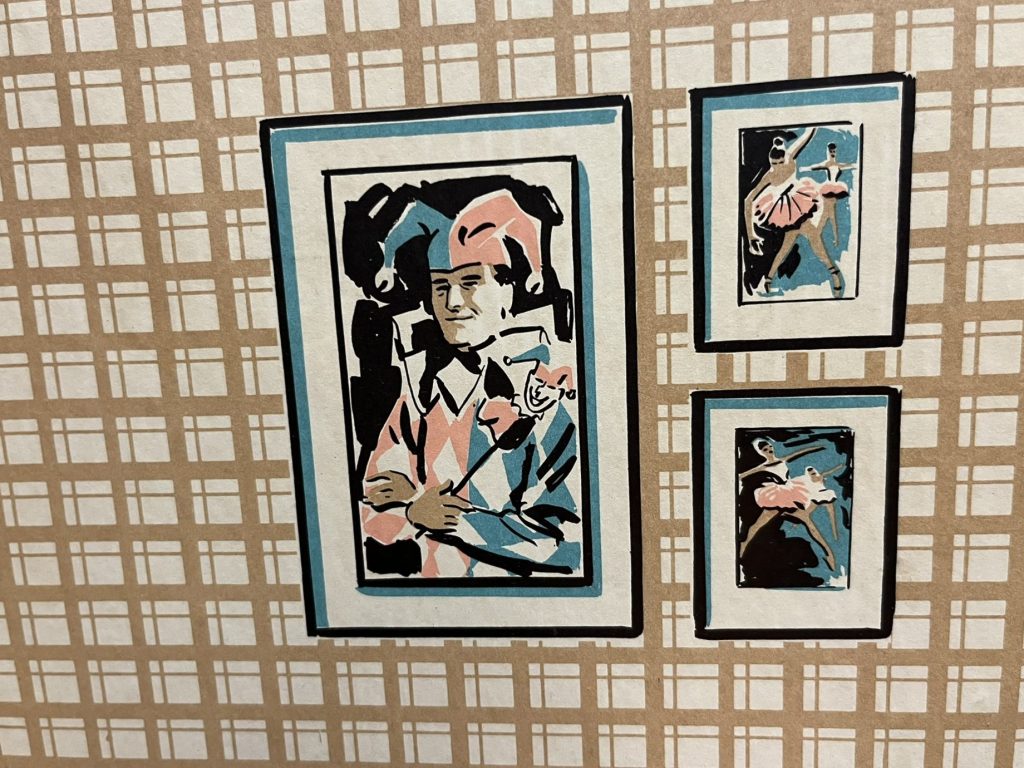
Beautiful illustrations throughout, with such wonderful attention to detail. There’s real artistry in every little corner.
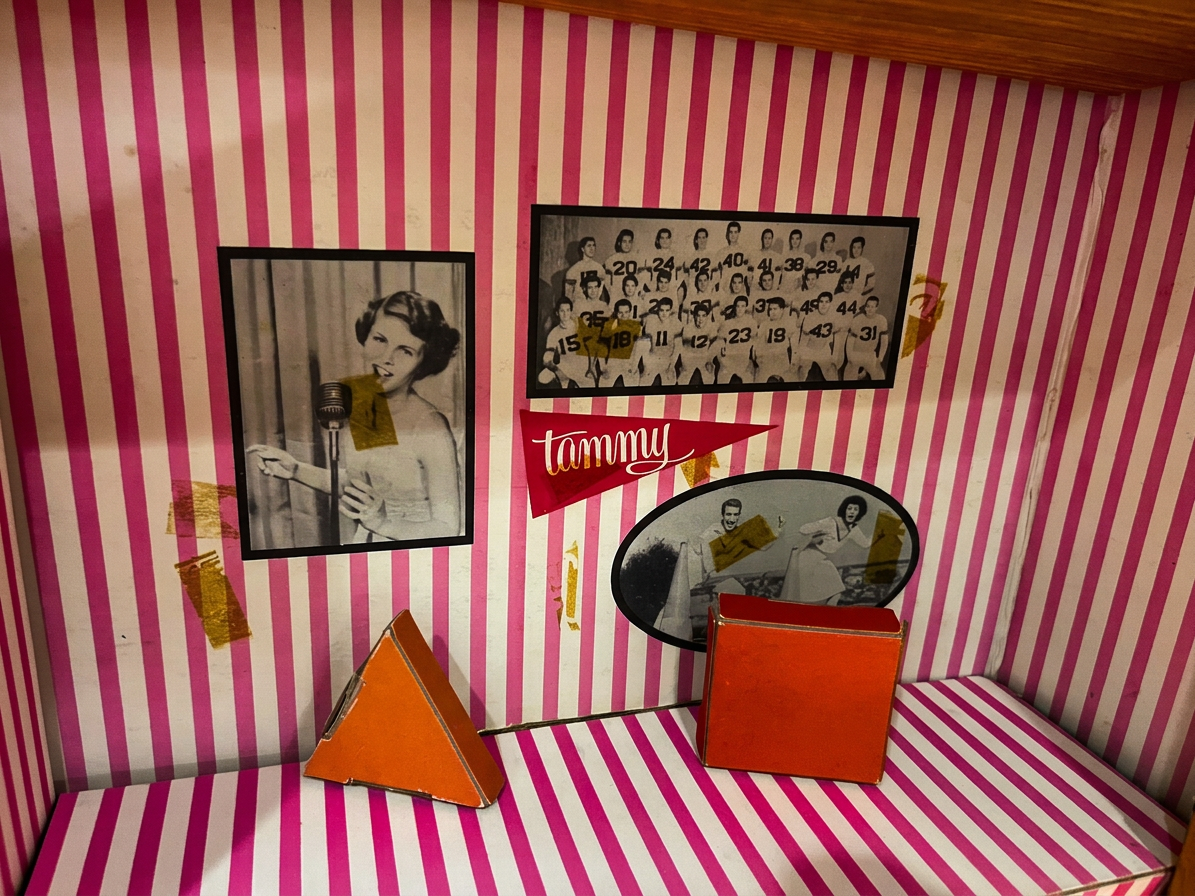
Even the walls tell a story.
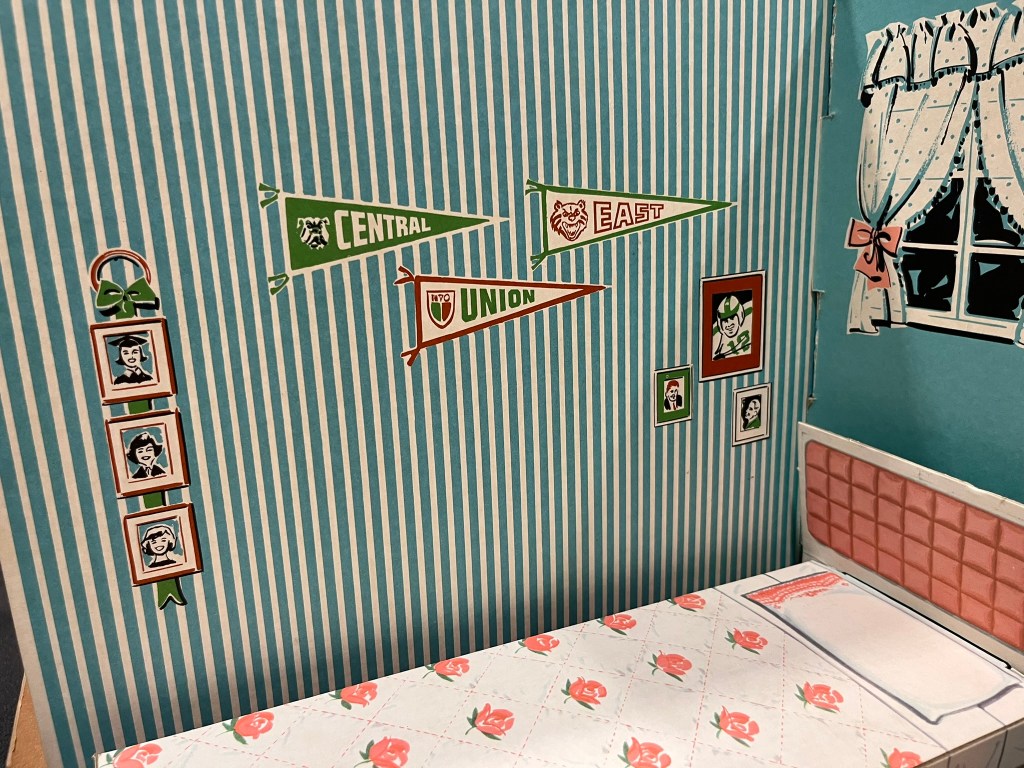
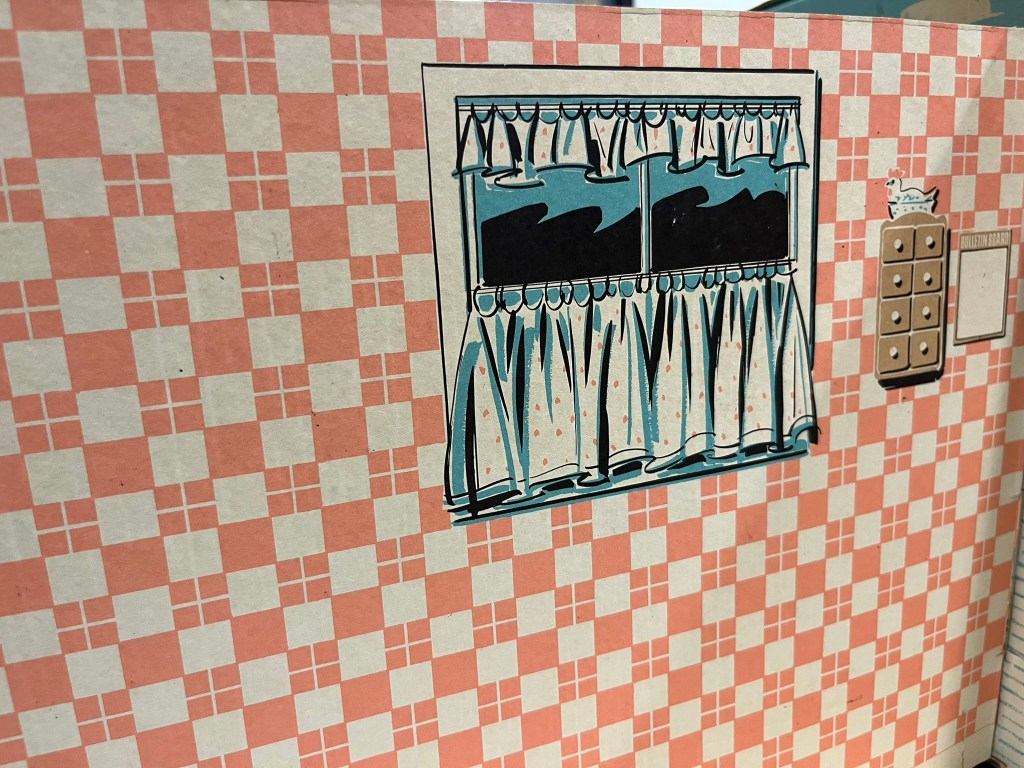
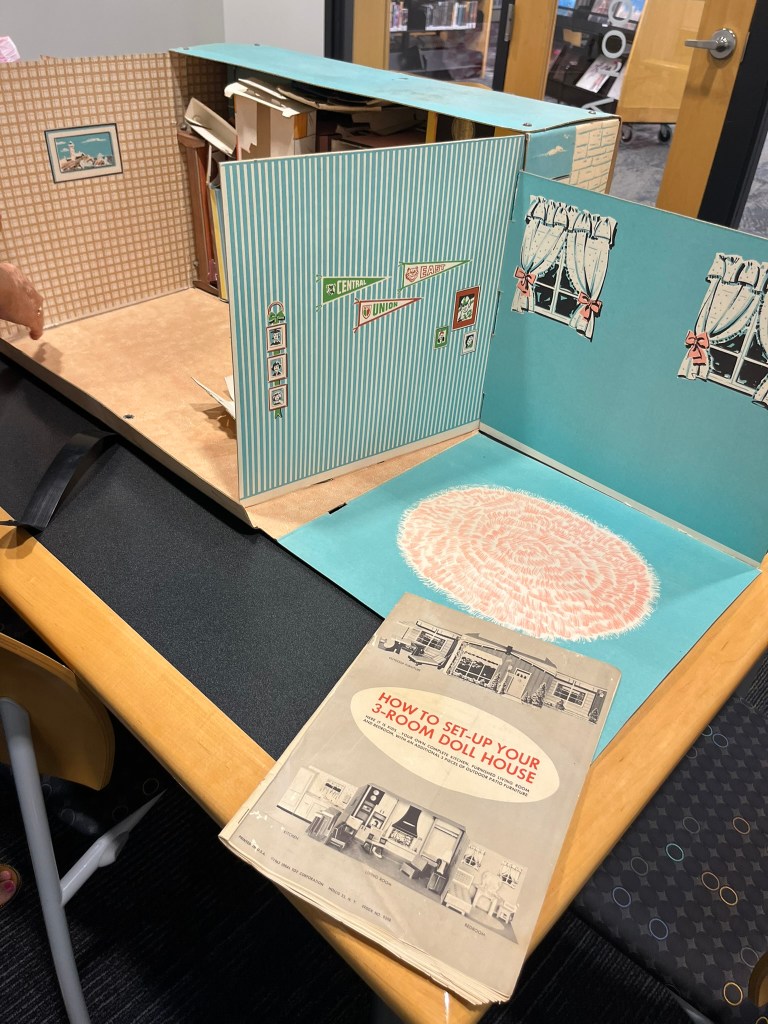
There are tiny school pennants hanging in the bedroom, framed pictures, curtains tied with pink bows, patterned wallpaper, built-in cabinetry and all sorts of illustrated details that a child could have spent hours studying.
And oh, that pink kitchen!
Today we might call this mid-century modern design. A retro. But back then, it was simply modern.
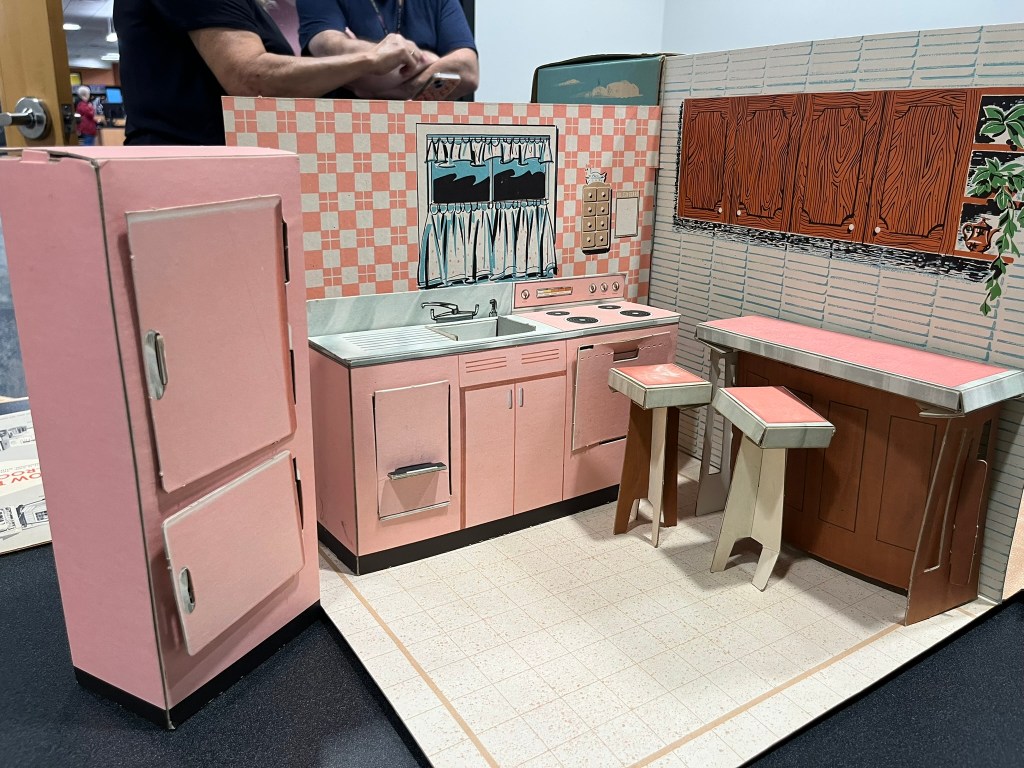
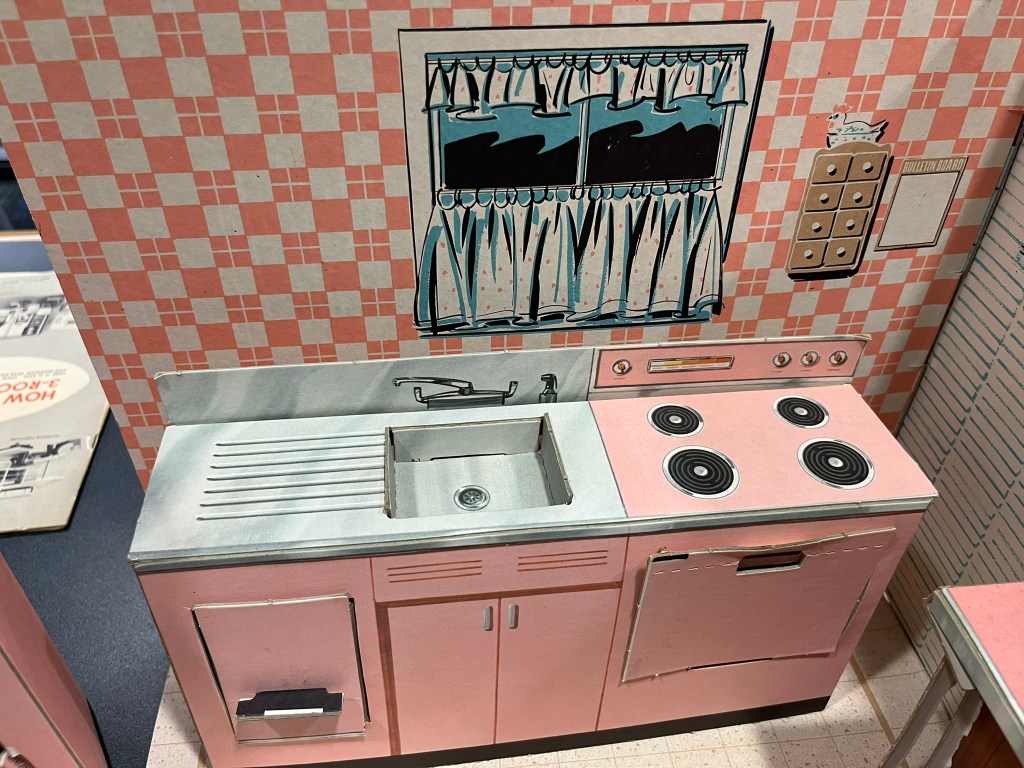
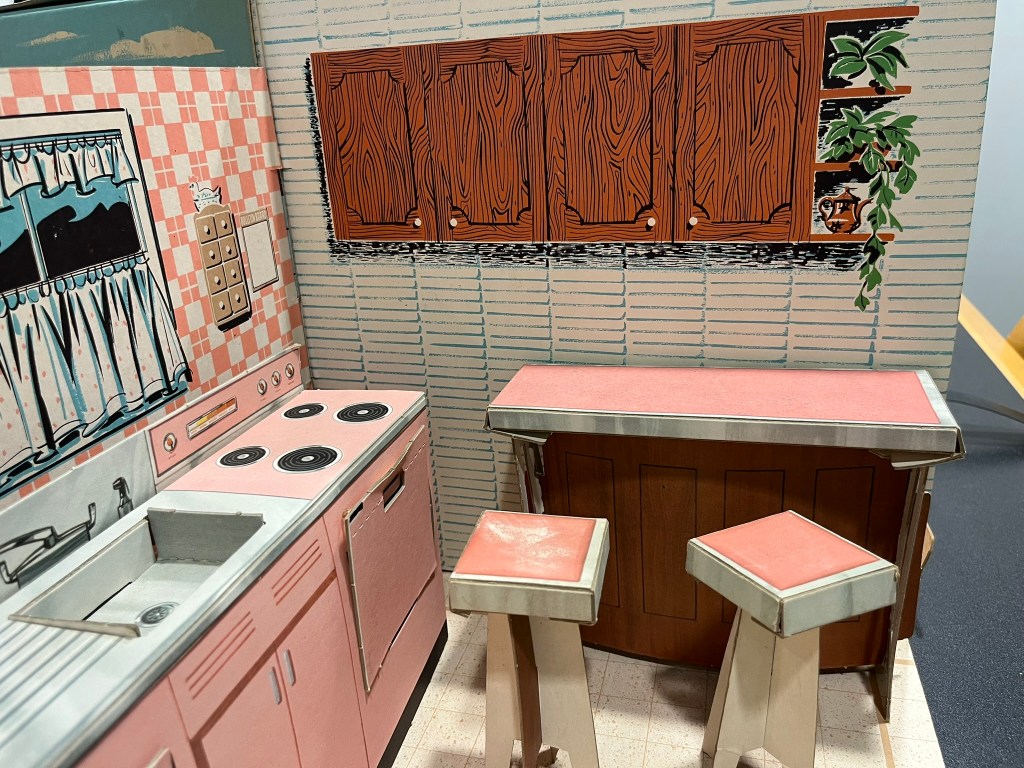
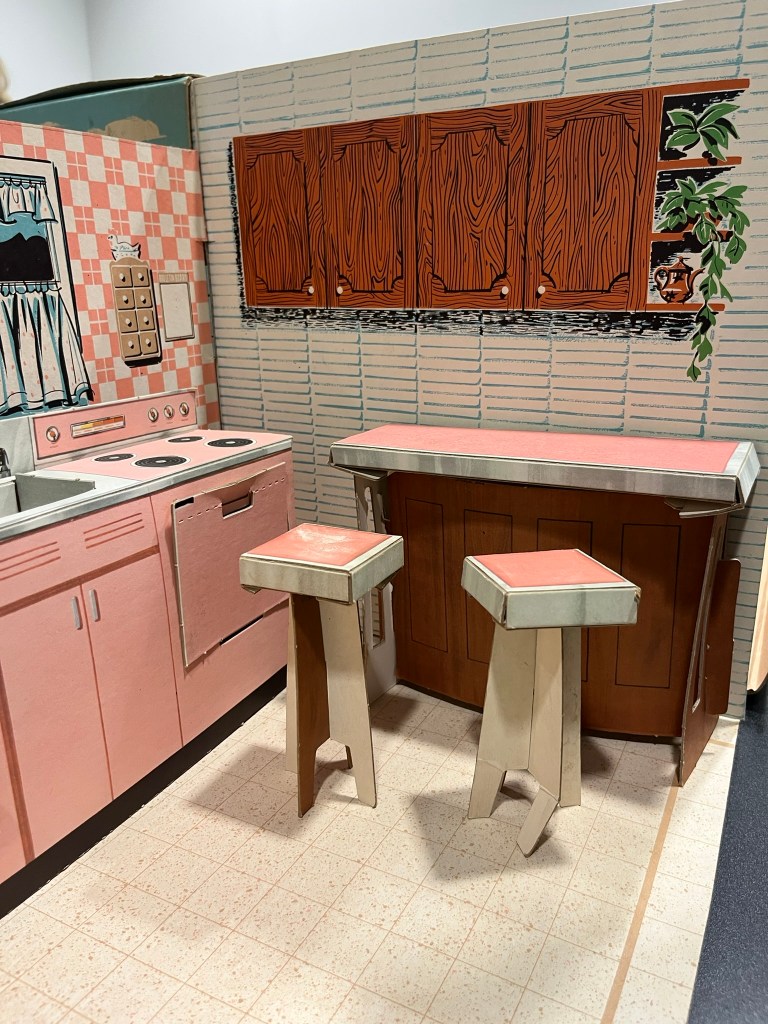
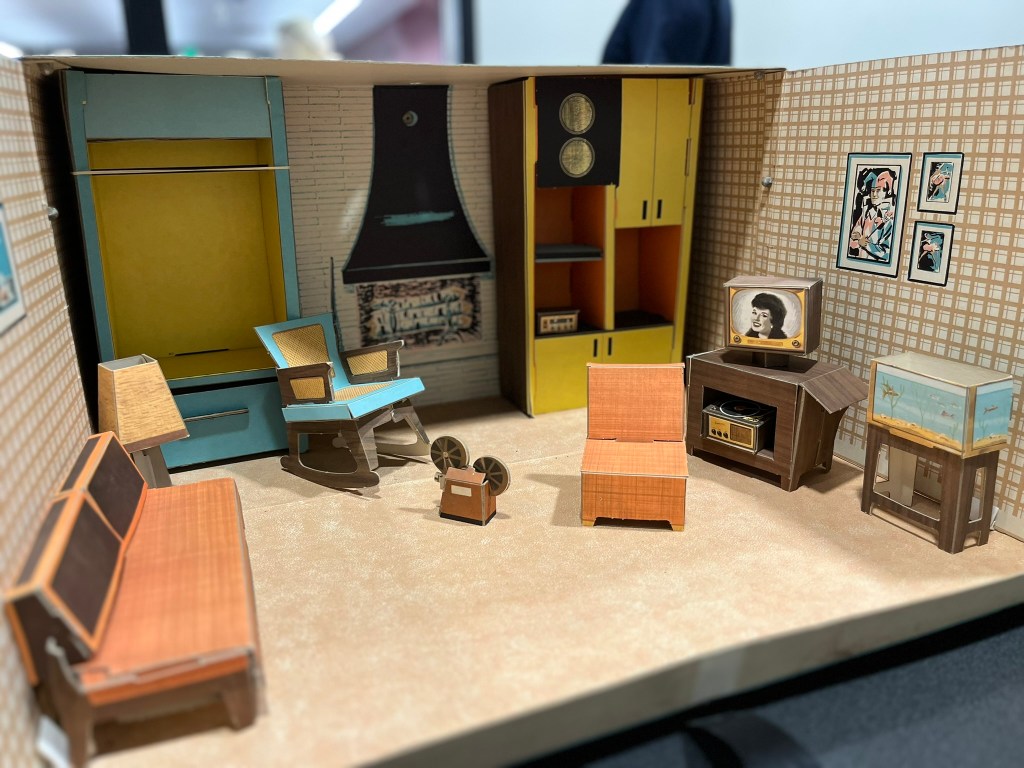
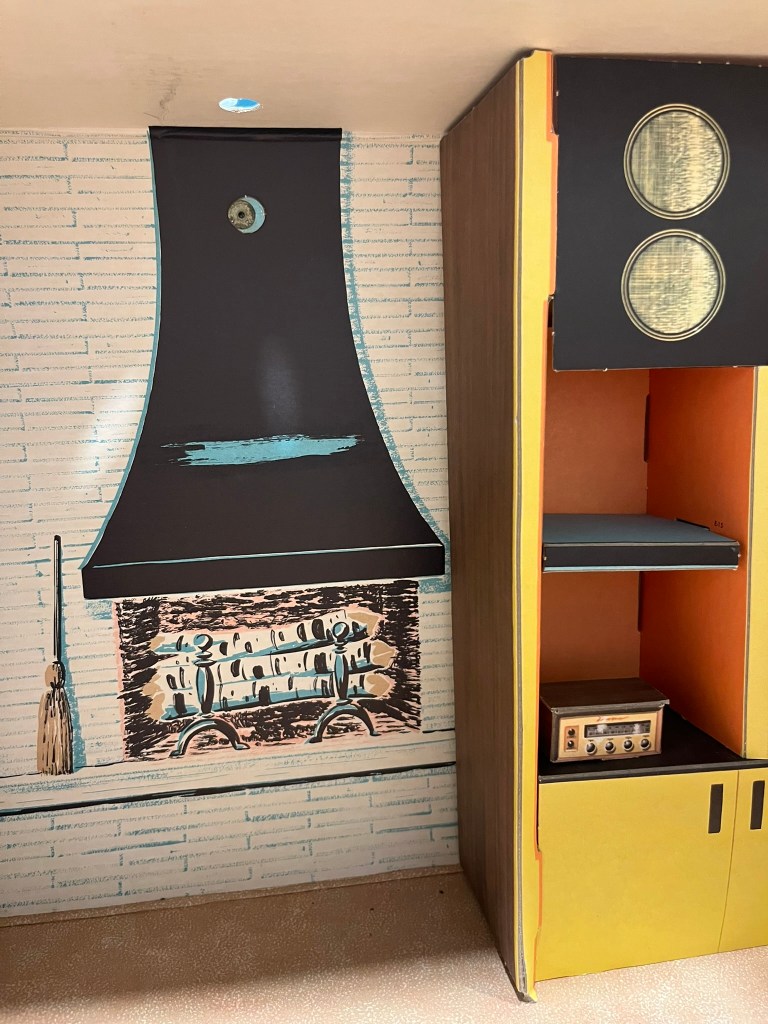
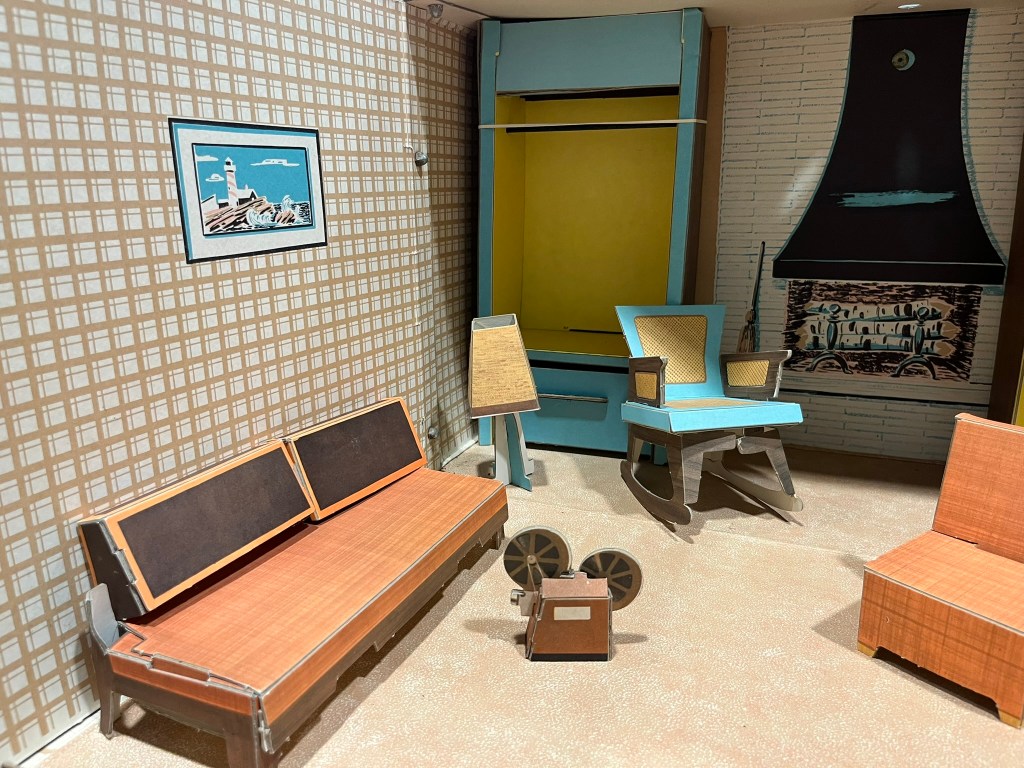
There are so many little details to take in. Every time I looked closer, I spotted something else!
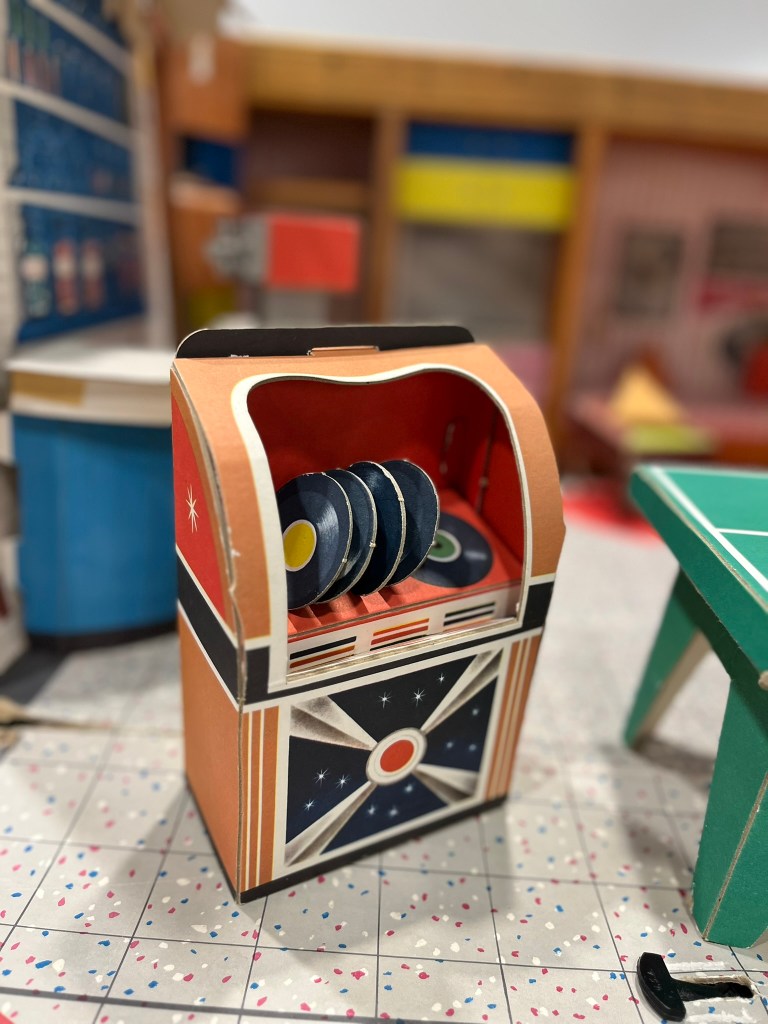
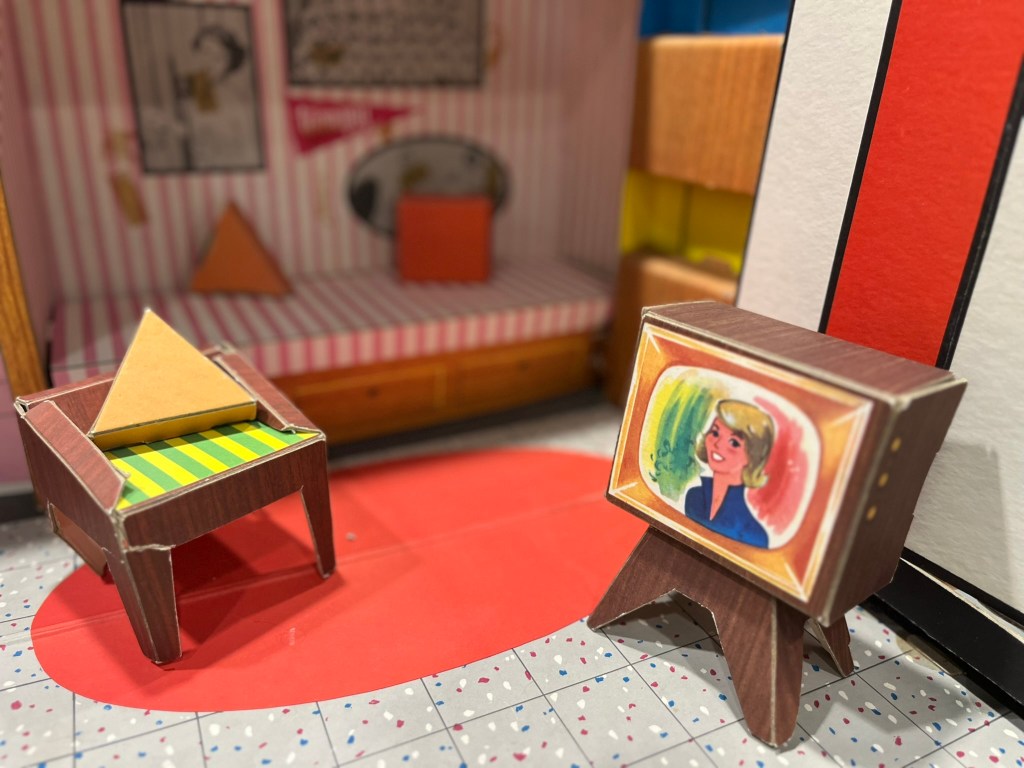
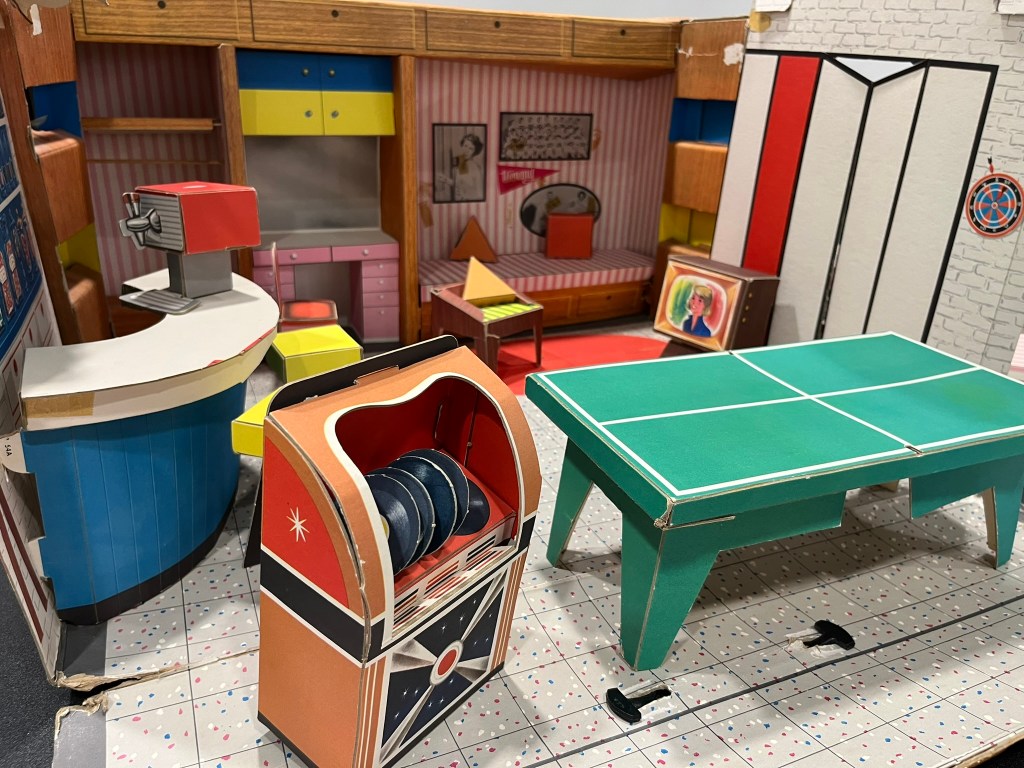
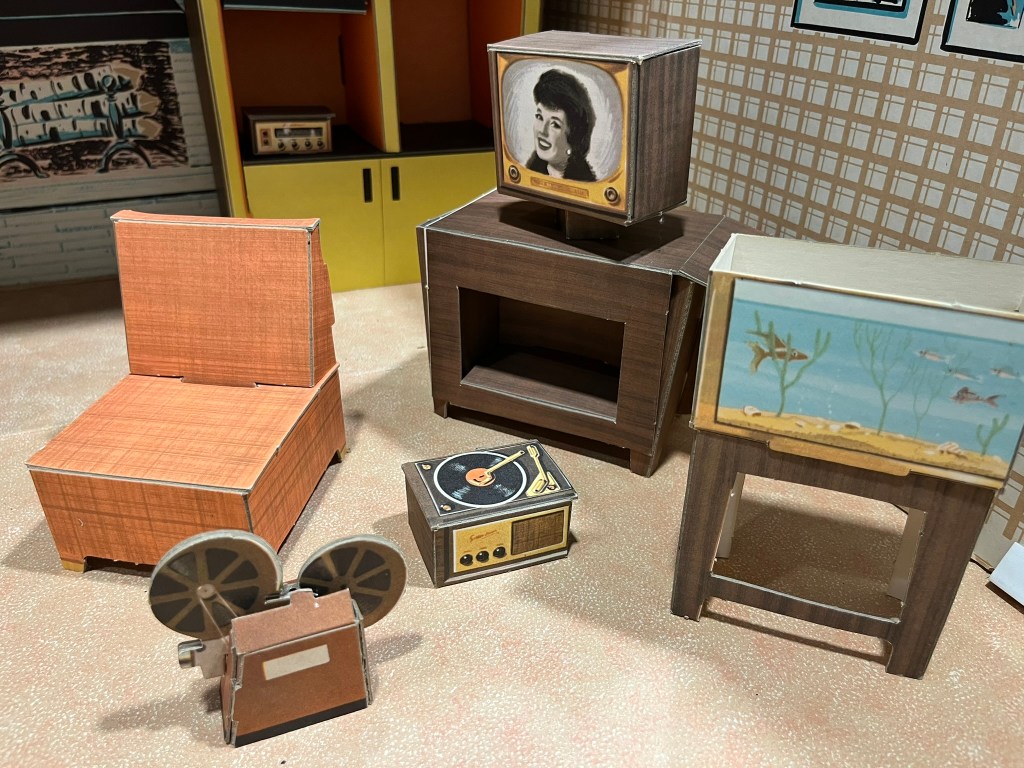
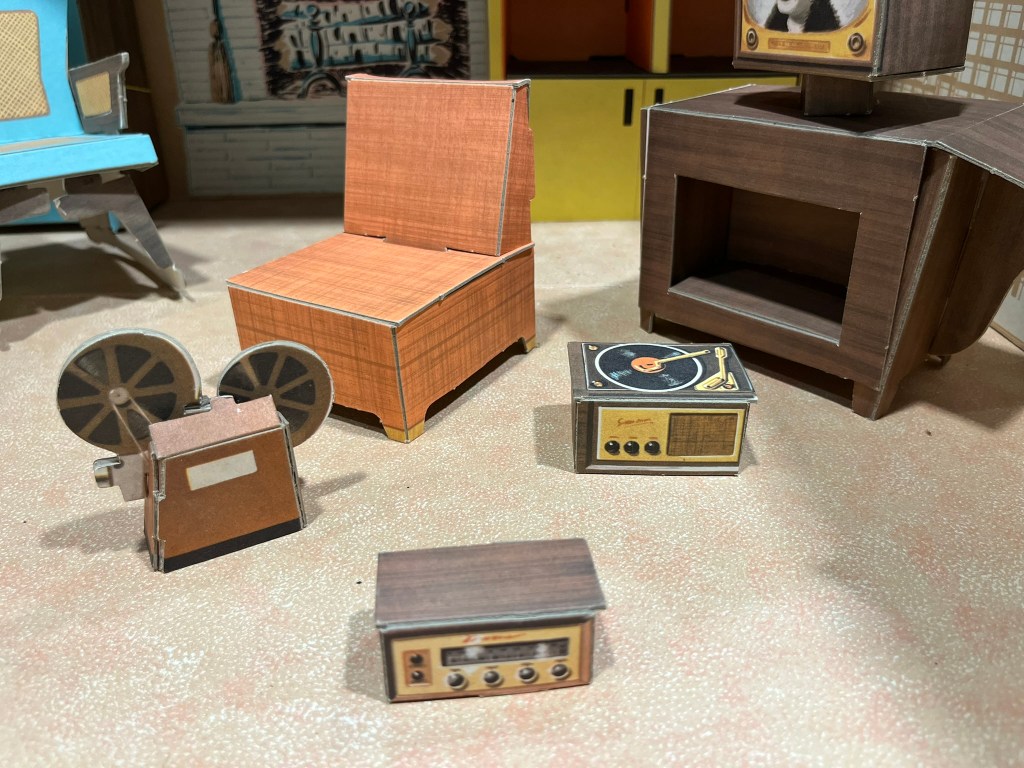
The living room wasn’t furnished with just a chair and television. It had an entire miniature world of 1960s entertainment—all created from printed and folded cardboard.
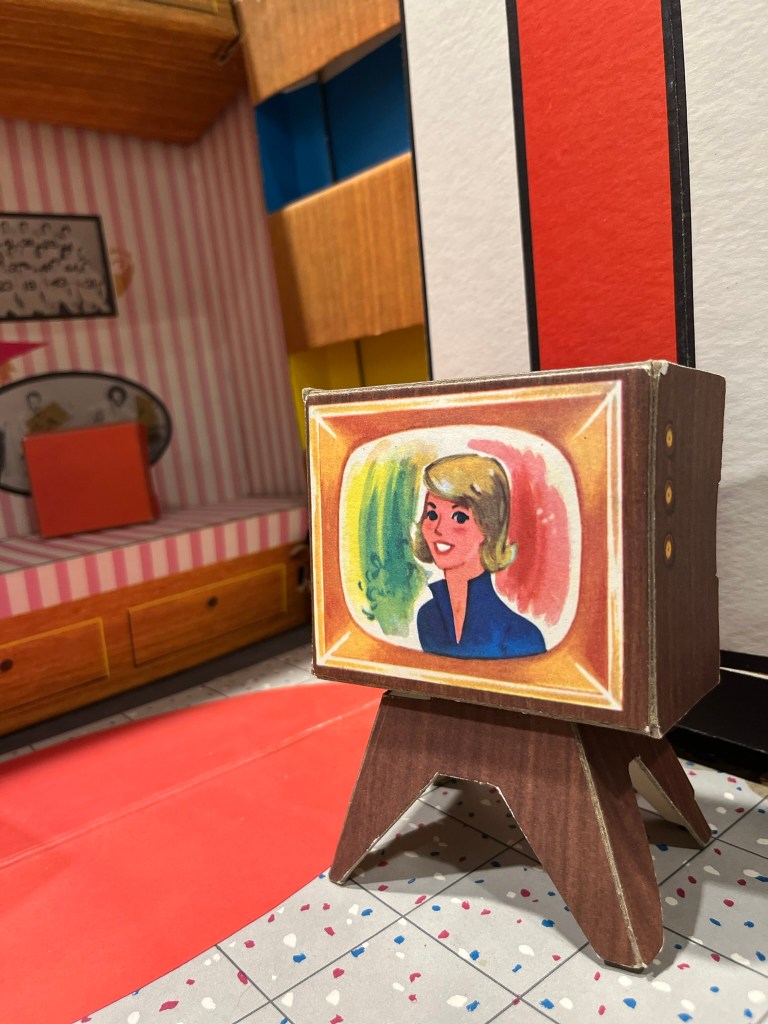
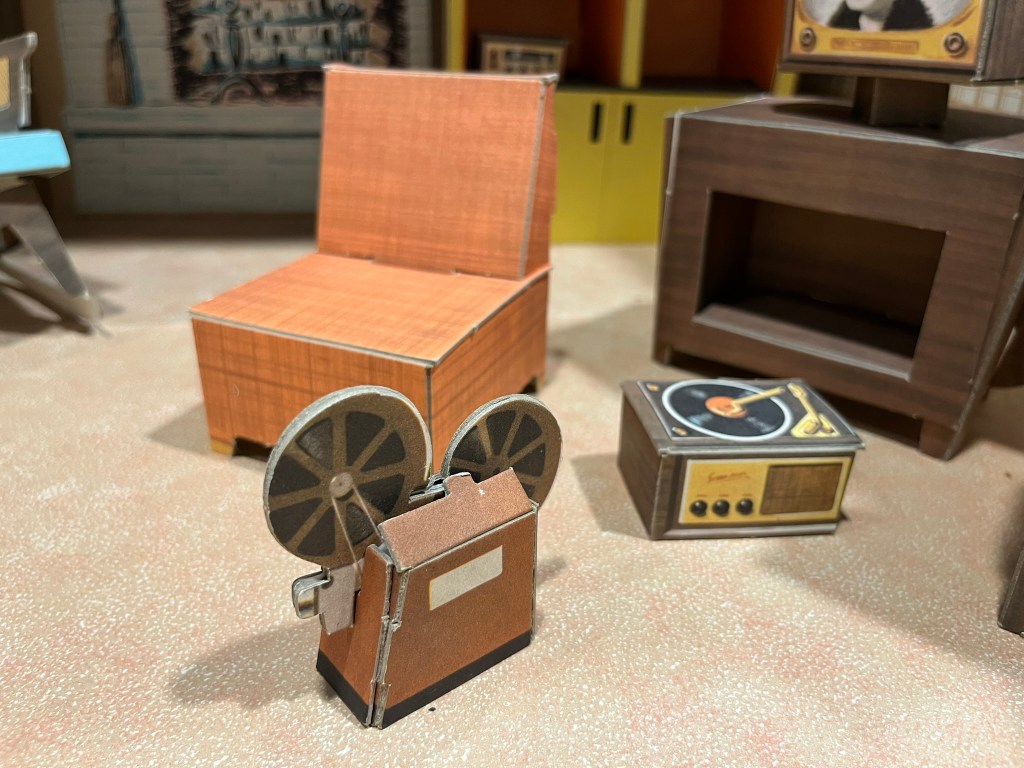
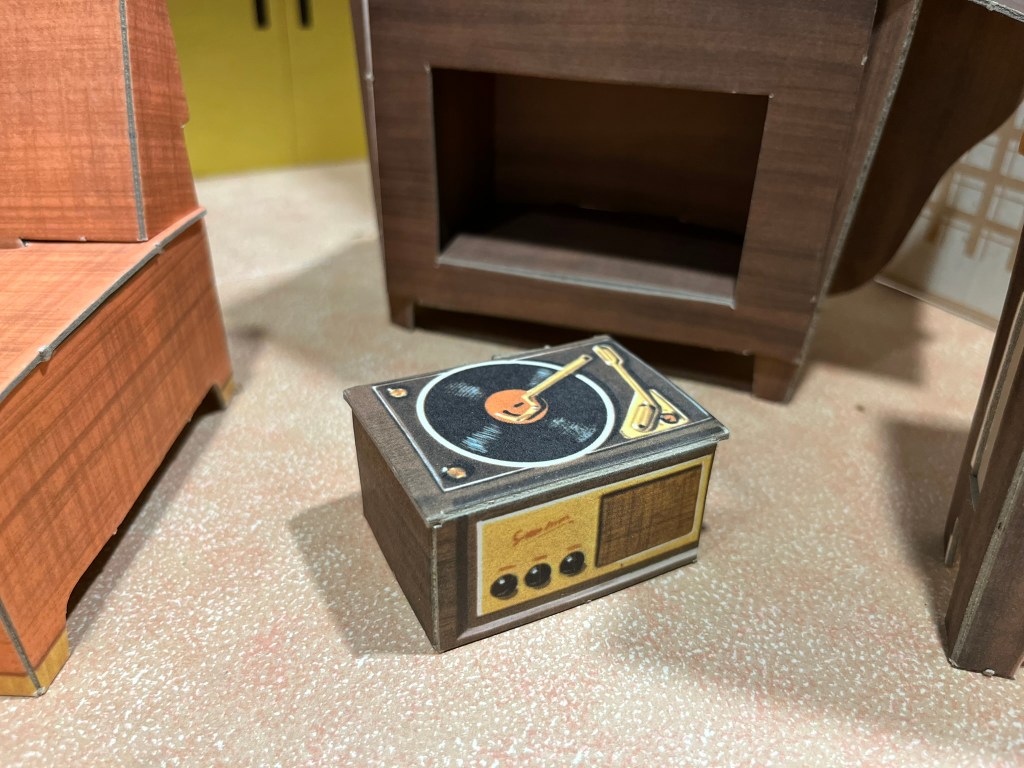
There’s a tiny television set, a record player with a record on the turntable, a reel-to-reel tape recorder, a radio tucked into the built-in wall unit, and even an aquarium complete with tiny fish, plants, and gravel!
I especially love the television. Instead of leaving the screen blank, the toy designers illustrated a glamorous woman with an early-1960s bouffant hairstyle, as though the family had been watching a favorite program.
Even the reel-to-reel recorder has individual reels and a little crank. The record player has its tonearm positioned over the record, and the aquarium has its own mid-century stand. These details didn’t have to be there, but someone took the time to design them anyway.
For a toy that originally sold for only $5.99, there was an extraordinary amount of imagination and artistry packed into it. All those illustrations helped turn simple printed cardboard into a tiny house that felt like a real home.
And that’s what makes seeing one in person so special. This wasn’t created to become a collectible. It was made to be unfolded across the floor, played with, and filled with whatever stories a child’s imagination could invent.
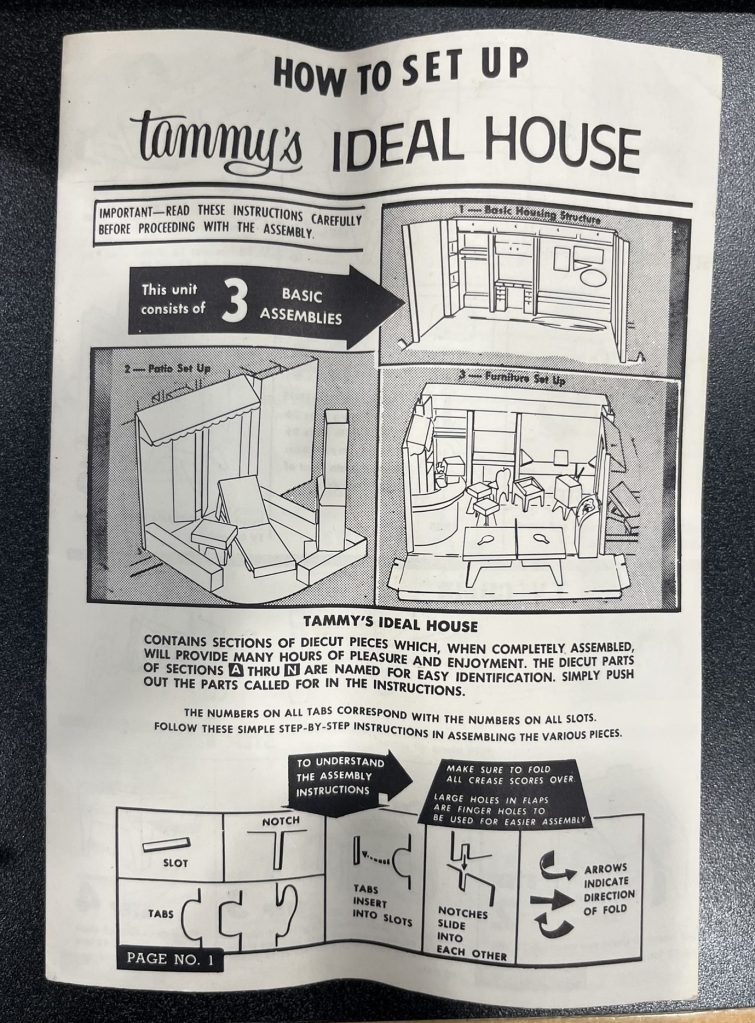
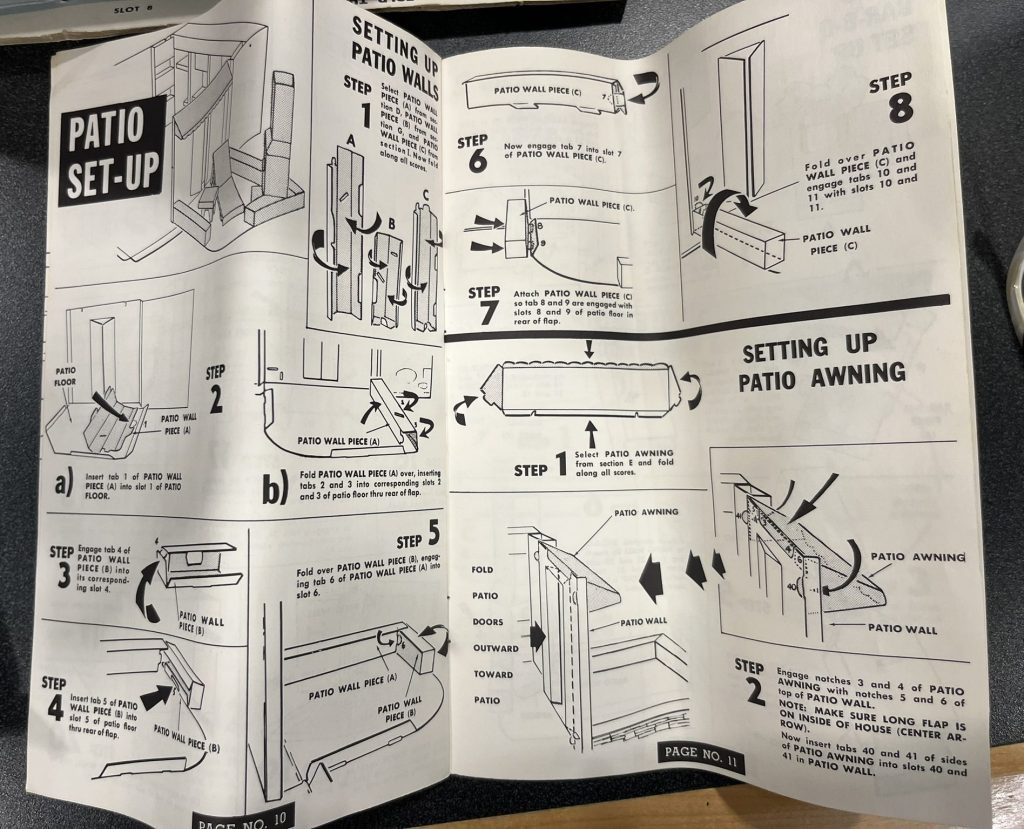
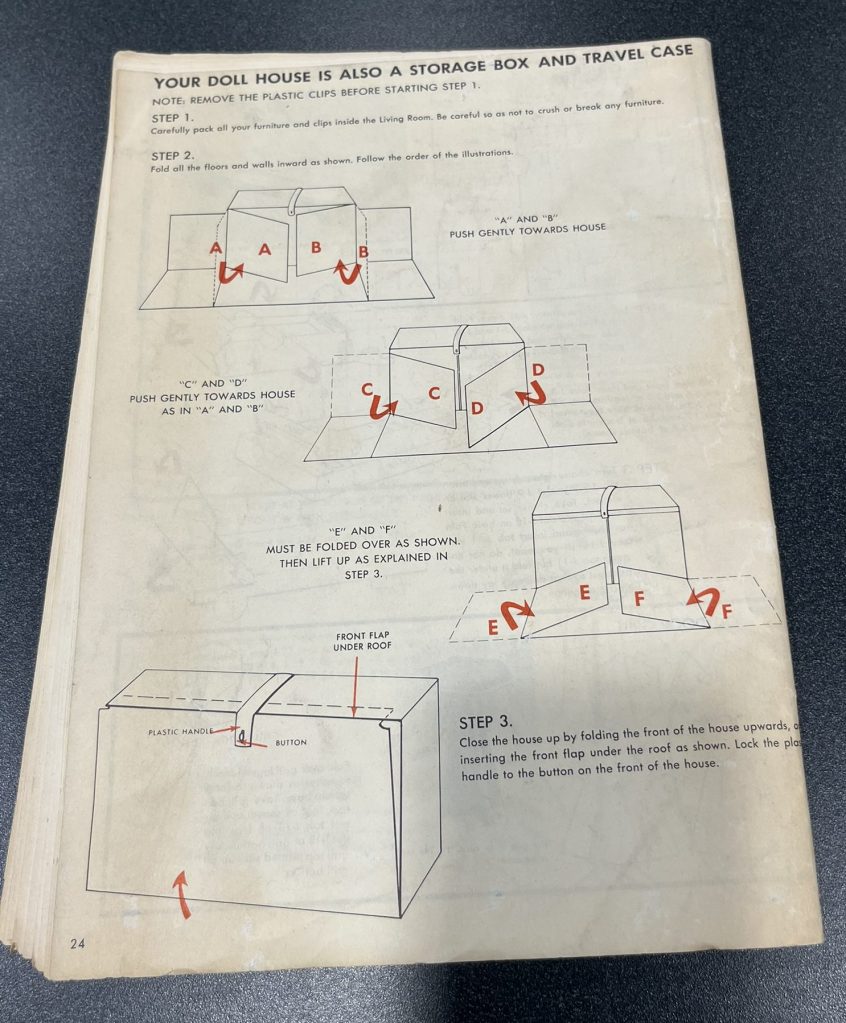
What impressed me most was how much remains today—not only the house, but so many of its original furnishings and even the instruction booklet!
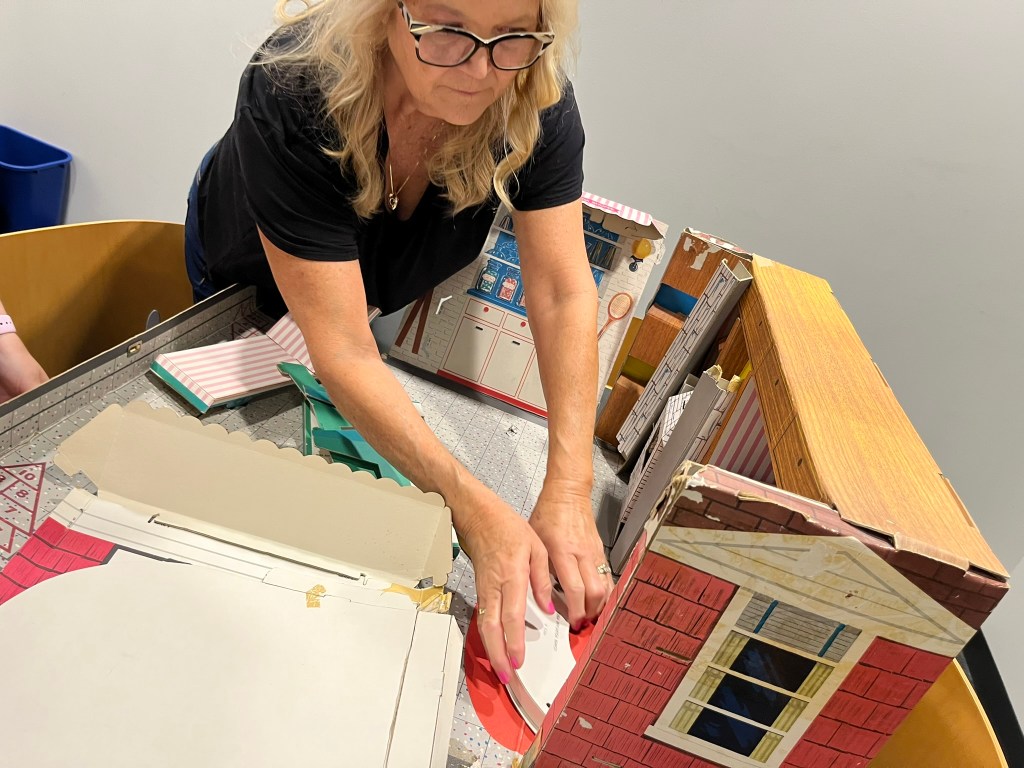
Sharing the experience with Sally and her daughter at the library made it even more meaningful. We opened those old cardboard rooms together, noticing one charming detail after another. This wasn’t simply a vintage dollhouse anymore. It was part of their family’s story.
More than sixty years later, this little house has become something its designers probably never imagined: a piece of childhood history and a family legacy.
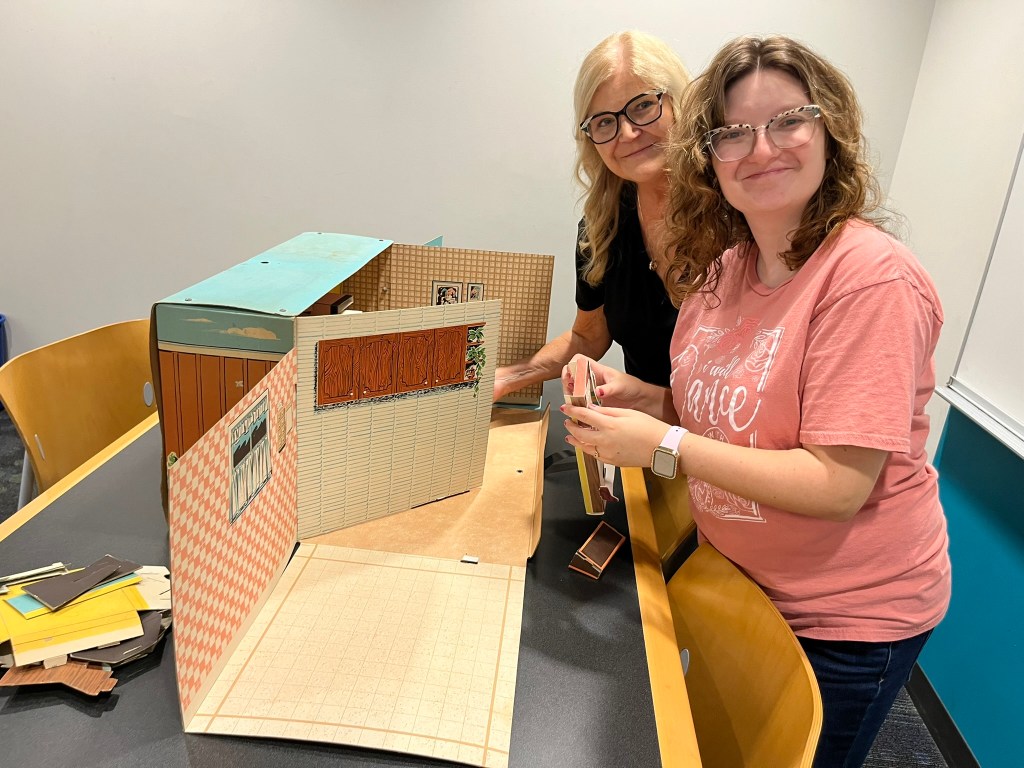
That’s when an old dollhouse becomes something more than a collectible. It becomes a family legacy.
Maybe that’s why I love old dollhouses so much. Their scratches, worn edges, and faded colors aren’t necessarily flaws. They’re signs of a toy that was played with, loved, and treasured enough to keep.
Miniature houses don’t just preserve tiny rooms. They preserve childhood, memories, and—when we’re lucky—a family’s story from one generation to the next.